Amanda Nichols
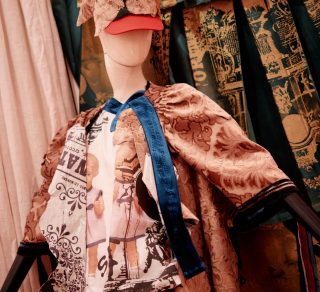
Amanda is a designer and founder of Replica Project. Nichol’s training in film and haute couture informs a multi-layered practice interrogating the complex connections between costume and fashion. She received the prestigious Australian Fashion Foundation award in 2019, the Australian Fashion Week Next-Gen award in 2021 and the Victorian Premiers design award in 2022.
S!X – Denise SPRYNSKYJ and Peter BOYD
Formed in 1994, S!X have pioneered a thoughtful and research based response to tailoring using refashioning and recycling techniques. Both Denise Sprynskyj and Peter Boyd are leaders in design education at RMIT.
Future reMade Polly Cadden and Laura Konrads
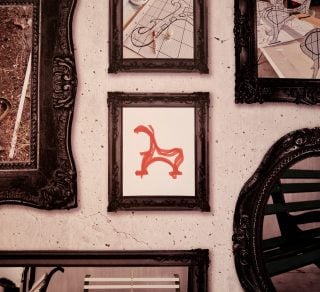
FUTURE re MADE crafts ethical, Melbourne-made furniture using post-industrial waste, producing tables, sideboards, and custom designs with a modern mid-century aesthetic. Designed to assemble without fixtures, the pieces prioritise longevity. Creative director Polly Cadden leads a practice where waste becomes the foundation for considered and enduring design.
DNJ Paper – Jake Nakashima-Edwards
DNJ Paper is an award-winning research and design studio, who employ a range of techniques, both traditional and nontraditional, to create paper clothing, accessories, and objects. Their pieces are considered a work in progress, never fully “finished,” and are designed to evolve over time.
Dr Lorinda Cramer Deakin
Dr Lorinda Cramer is a social and cultural historian exploring the gendered dimensions of dress and textiles, the worn and material histories of Australian wool, and historical examples of sustainable fashion and waste.
Erin Lewis-Fitzgerald
Repair artist Erin Lewis-Fitzgerald champions visible mending and creative darning as both craft and philosophy. Author of Modern Mending and practicing since 2009, her work transforms damaged textiles into objects that wear their history with intention.
Hyeonjeong Weon
Emerging textile designer Hyeonjeong Weon explores notions of comfort and home through her dressing of furniture with once fashionable discarded garments, creating slipcovers that evoke a bodily embrace.
Richard Aitken
Historian Richard Aitken is a Melbourne based historian, architect, curator and poeticist. Author of books on garden history, he edited The Oxford Companion of Australian Gardens. His work as a poeticist explores connection through object, history and place.
Leeyong Soo
Sustainable style advocate, Leeyong Soo has been publicly campaigning for the making and remaking of clothes, sharing her skills through her content creation to empower others to adopt an ethos of DIY.
VTM Fashion
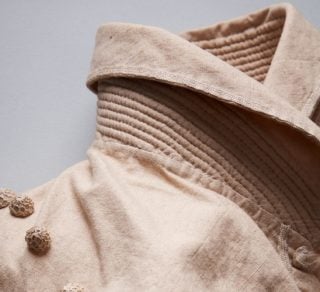
Emerging designer and seamstress Valerie Miller draws on historical techniques as a framework for sustainability.