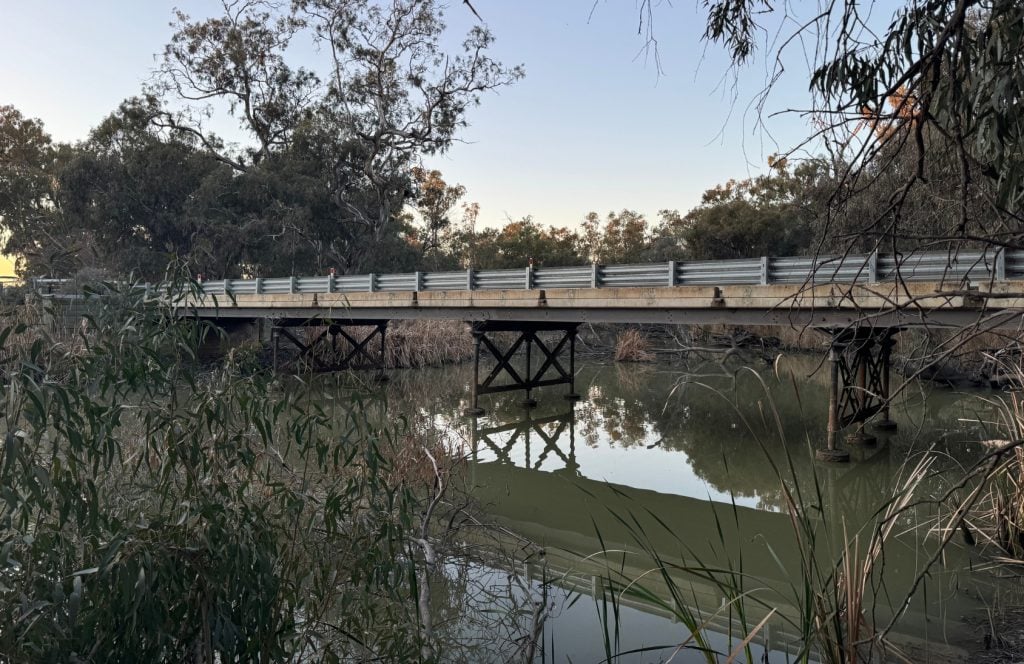
Continuing to stand for over 143 years since their construction, discover what makes these wrought-iron bridges important to the heritage of NSW.
History
A need for a bridge over the Lachlan River at Oxley was first voiced by the local community in 1870. It was argued that a crossing would reduce the time and costs involved in the movement of stock, and act as part of the solution to make it practical for homesteads to send their wool and livestock to Sydney markets, rather than directing trade south to Melbourne or Adelaide.
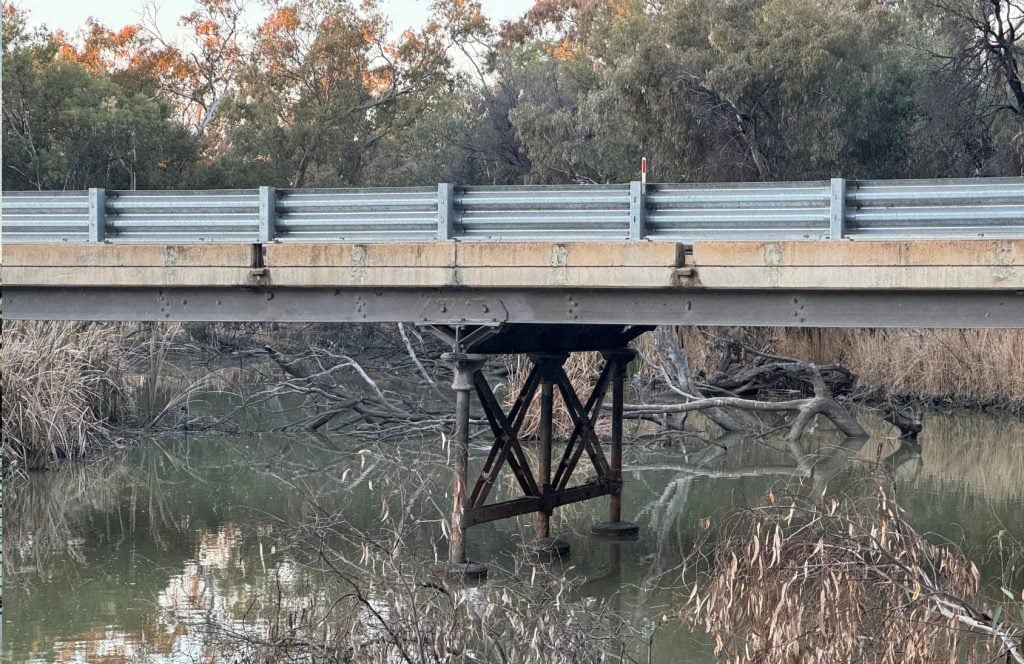
The campaign for a bridge at Oxley soon gained support of the government, and a design was drafted by G. H. Royce and Co, encompassing two single lane bridges. Following its approval by the Public Works Department, G. H. Royce and Co were employed as contractors for the bridges’ construction with Oxley Bridge No.1 and Oxley Bridge No.2 opening to the public in 1883.
Significance
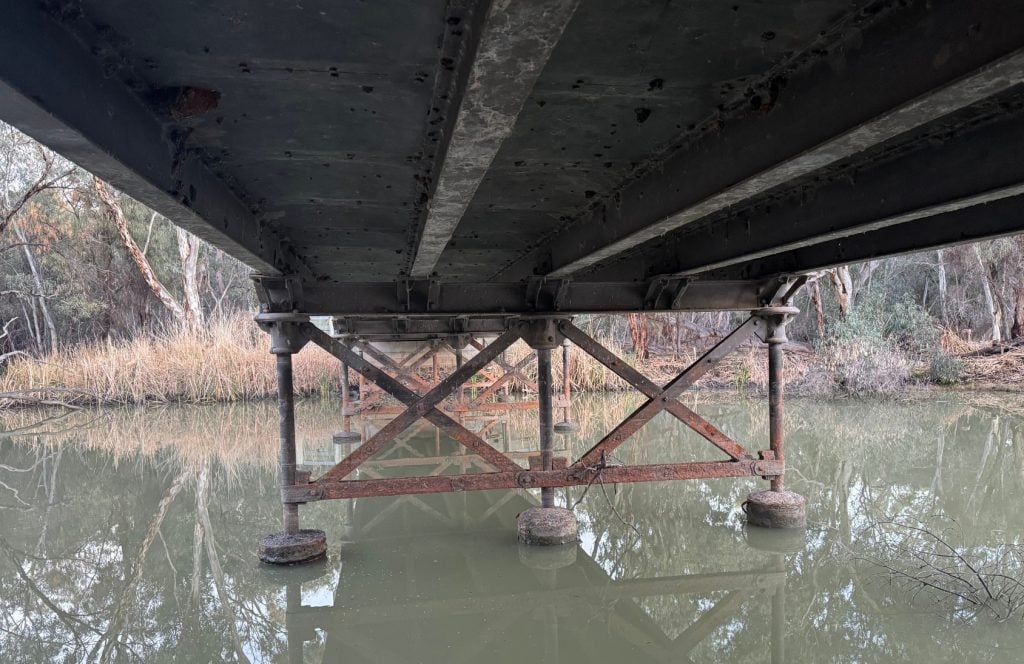
While Oxley Bridge No.1 and No.2 may look unassuming, the bridges are unusual in the fact they were both assembled via a kit-bridge system. Since opening in 1883, the two crossings have provided a vital route for traffic for over 143 years, a remarkable longevity, considering the simplicity of their kit construction.
Developed by the Horsely Company in England, the wrought-iron kit for the Oxley bridges used bolted connections, rather than hot riveted connections like most other bridges during this time. The bridges also feature rolled wrought iron joists. Manufactured for only a short time in the late nineteenth century, these types of joists were rarely used in Australia for the construction of bridges.
Future
Although major alterations were made to the decks in the early 1980s and various alterations have been made to the abutments over the years, both bridges remain in a state reflective of their original 1880s plans and construction.
Having endured the test of time, these straight-forward yet sturdy crossings prove that sometimes it pays to keep it simple.