What is a conservator’s role when an artwork is damaged during public protest? Julian Bickersteth, CEO of International Conservation Services (ICS) and Chair of the National Trust (NSW) Collections Committee, reflects on the balance between preservation and public protest.
Bring a group of conservators together in a room and you will generally find an environmentally and socially aware group. But in the aftermath of an attack on an artwork, they are usually the people tasked with restoring or preserving what remains and – regardless of whether they have sympathy for the cause – they tend to grit their teeth and pick up the pieces. They will put aside personal views to ensure that the artwork survives for any potential future interpretation.
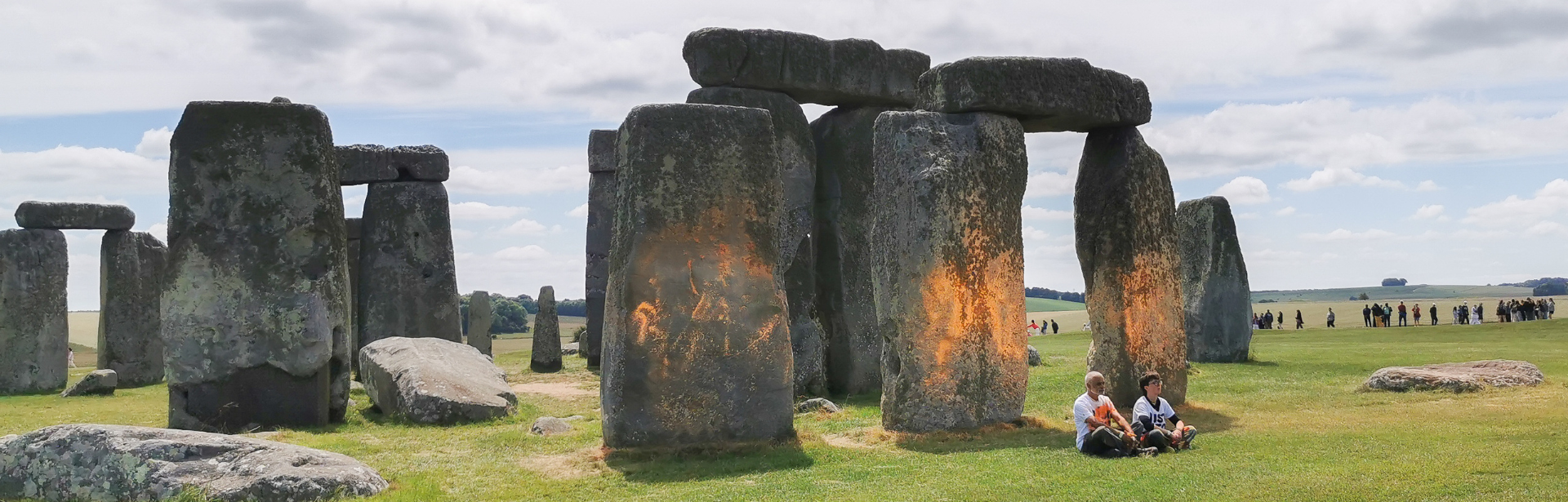
Over the past few years we have seen activists spray paint on Warhol’s Campbell’s Soup I at the National Gallery of Australia in Canberra; throw soup at Van Gogh’s Sunflowers at London’s National Gallery; daub Stonehenge with orange cornflour; pull down colonial statues and circulate emotive images of protesters being beaten up.
The causes cited by activists have varied. They include frustration at perceived inaction on climate change; opposition to cultural institutions accepting sponsorship from fossil fuel companies; outrage over the ongoing display of statues of colonial figures and advocacy for Indigenous rights.

The motives behind the attacks are not always clear beyond drawing media attention to the respective cause. A young Canadian climate protester who threw paint at a Picasso at the Montreal Museum of Fine Arts in 2025 provided some insight when he said: “A lot more resources have been put in place to secure and protect this artwork than protect living, breathing people. Art only flourishes when people live, not when they survive.”
Instigators have felt so strongly that they’ve been prepared to go to jail for the damage they have caused. Luckily, in most instances, targeted artworks have been framed and
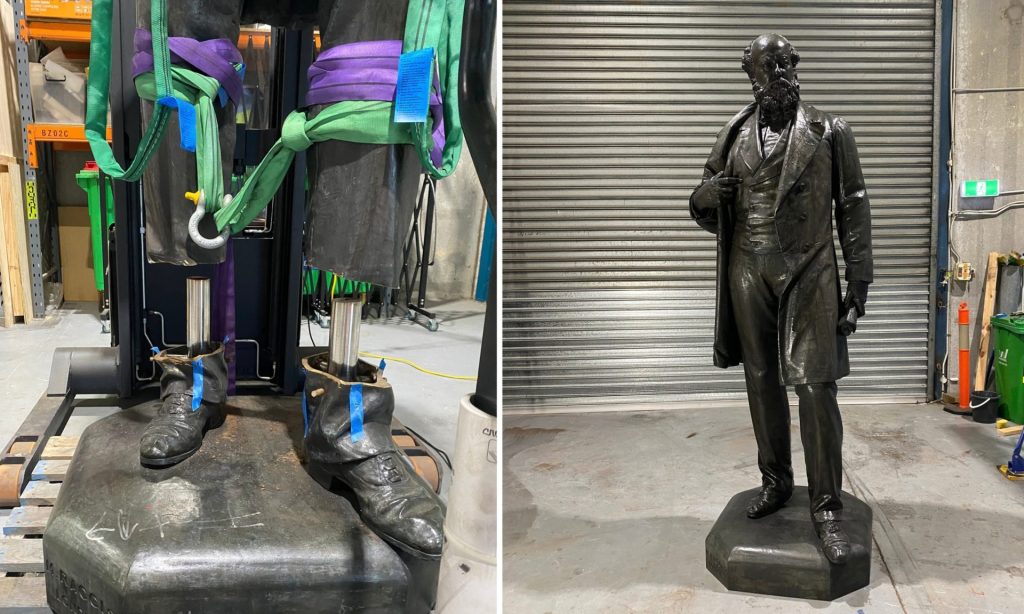
glazed, giving protection to the artwork. Not so, however, with the statue of 17th-century slave trader and public benefactor Edward Colston in Bristol, England, which was pulled off its plinth and unceremoniously dumped in the harbour during a Black Lives Matter protest. Closer to home, the bronze statue of William Crowther, a former premier of Tasmania known to be involved in the discredited pseudoscience of phrenology (including collecting and trading human skulls), was sawn off at the ankles.
How do conservators respond to these various actions? I would suggest that, like doctors who take a Hippocratic Oath, conservators feel duty-bound to ensure damaged artworks are at the very least stabilised and optimally returned to their pre-damaged condition. In Bristol, Colston’s bronze was hauled out of the harbour, partly cleaned and placed on display at the Bristol Museum’s M Shed, still covered in graffiti and bearing the scars of being dragged along the streets. The damage
itself has become part of the object’s story.
Stonehenge recovered from its dousing in cornflour due to the application of a strong air blower and luck that there had been no recent rain. Conservators are still evaluating, in collaboration with environmentalists, the long-term impact of cornflour on the rare lichen that populates the sarsen stones.
And in Hobart, the statue of William Crowther was restored with the ankles rewelded to the main body. The statue itself, however, remains in storage with no plans to reinstate it on its plinth. An active art program entitled Crowther Reinterpreted is now underway.
So, in answer to the question, I believe conservators take a balanced approach when it comes to preservation and acknowledging public sentiment. Despite potential sympathies with protest causes, their job is to preserve cultural heritage by restoring targeted artworks to their pre-damaged condition.
Ultimately, history will be the judge.
Top image: In June 2024 climate activists from the group Just Stop Oil sprayed orange cornflour on Stonehenge (image via Just Stop Oil).
This story originally appeared in the June – September 2026 issue of the National Trust (NSW) magazine.
Discover more in the National Trust (NSW) magazine
Want to read more fascinating stories about heritage? Become a member of the National Trust (NSW) to receive a printed copy of the National Trust (NSW) magazine.
 Facebook
 Linkedin
 Email
Email