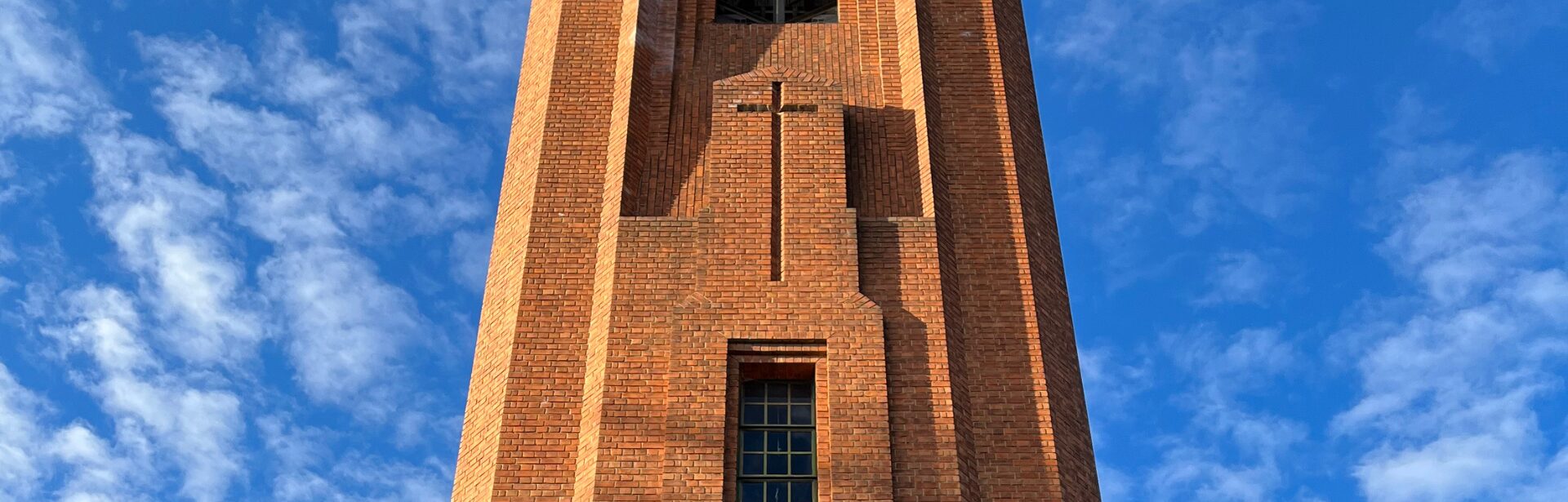
In honour of ANZAC day, we reflect upon a number of war memorial sites that are listed on the National Trust Register.
By Charlotte Anlezark
The NSW War Memorials Register documents more than 3,800 war memorial records throughout our state. Many of these sites are now identified heritage items, having been designed, constructed and funded by locals wishing to commemorate their family, friends and community who served their country.
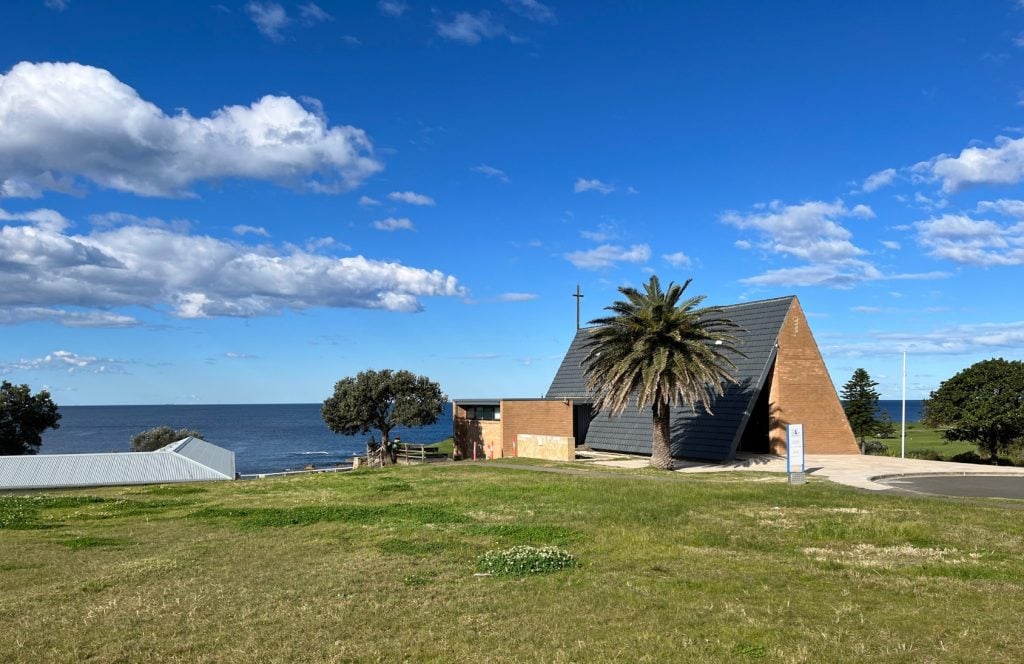
Australian Nurses War Memorial Chapel, Little Bay
Also known as the Coast Chapel, this memorial building was dedicated as ‘a tribute to the service and self-sacrifice of Australian nurses in time of war’, referencing the First World War nurses who were trained at the nearby Prince Henry Hospital. The chapel remains open to the public for weddings, memorials and celebratory events.
Constructed to the designs of N.W. McPherson, D.A Harrison and K.A Hassallin in 1967, this A-frame chapel sits atop the cliff at Little Bay with panoramic views across the ocean. The chapel contains an intricate stained glass window, creating a picturesque setting.
It is rare as a memorial solely dedicated to the contribution of nurses in Australian service.
O’Connell Anzac Memorial Avenue
The small village of O’Connell is located between Bathurst and Oberon in the NSW Central West. During the First World War, 36 men and women enlisted to serve, 10 of whom who died in active service. This memorial avenue was planted in their honour.
The planning for the avenue was organised by the O’Connell Progress Society, who held a number of dancing and musical events to raise funds for the project. Rows of Desert Ash trees, chosen for their connection to various battle sites, were planted along the main road into the village in 1925.
The avenue was officially opened in January 1926. Over 100 of these now century-old trees remain at the entry to O’Connell, creating a significant commemorative entrance to this historic village.
Lismore Memorial Baths
The Lismore Memorial Baths are an inter-war free classical style building constructed to the design of prominent local architect, F.J. Board. They are also a result of a grass-roots movement of the local community to erect a fitting memorial to the 200 soldiers from the district who died during the First World War.
Constructed from 1927-1930, the proposal for the baths in a Soldiers’ and Sailors’ Club meeting was described as follows:
‘Visualise for the moment what the result will be – a park, with lawn, and waving palms, with wide, sweeping paths leading from a memorial gateway to the imposing façade of the memorial baths, with the river in the background, with new council chambers on the right, and bowling green in the rear background – the whole a spot of beauty that will at once place Lismore again in the lead of country towns.’
Fundraising for the Memorial Baths was organised by the local community and RSL and included a ‘Memorial Baths Carnival’ on 20 October 1926, where the fundraising slogan was ‘Be a Brick, Buy a Brick, For Lismore’s Memorial Baths’.
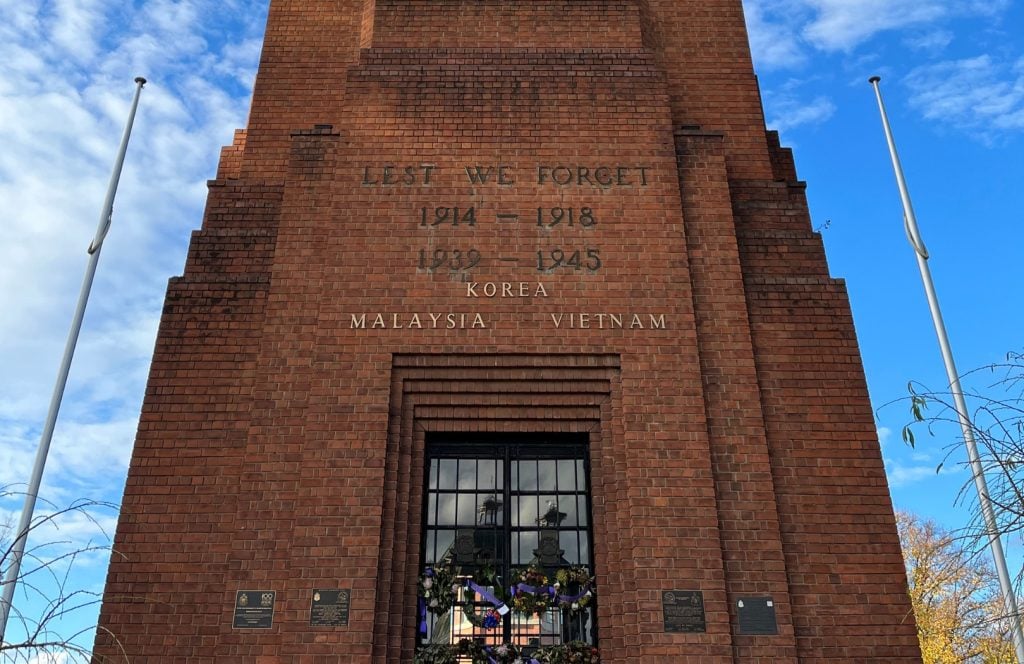
Bathurst War Memorial Carillon
The Bathurst Carillon occupies a prominent position along Kings Parade in the regional city’s civic centre. Towering at an estimated 100 ft and containing 35 bells that ring out every quarter hour, it is one of only three carillons in Australia.
Designed by architect John Drummond Moore, the brickwork tower was opened on Armistice Day in 1933, after a decade of extensive community funding. Its ground level contains windows through which a bronze sculpture and eternal flame can be viewed.
Originally erected to commemorate those from Bathurst and surrounding districts who had fallen in the First World War, each of its bells are inscribed with dedications to the individuals who served in the Great War and the villages they came from. The carillon inscription now also honours the Second World War, Korea, Malaysia, Vietnam and 100 years of the ANZAC spirit.
A monument to the Boer War is also located further along the Kings Parade Park.
Hankinson Memorial Fountain, Narrandera
The Hankinson War Memorial Fountain was donated to the people of Narrandera by Alderman and Mrs Hankison in 1922. It is located inside the Victoria Square Memorial Gardens and honours those in the Narrandera District who served in the First World War.
The ceramic fountain is incredibly rare, as only one of two fountains in the world created by Royal Doulton (the other is located in Pakistan).
When the fountain was smashed by an act of vandalism in the 1970s, it was very carefully restored to original condition by Charles Pearce.
Gulgong District Soldiers Memorial band Rotunda
The Gulgong District Soldiers Memorial Band Rotunda was developed by the Gulgong Progress Association, who led the project from 1915 to raise funds to establish a rotunda to honour those who had served in the First World War.
Opened in March 1918, the rotunda was reported in the Sydney Mail as follows: ‘The rotunda is regarded as one of the finest in Australia and is the only one of its kind to be seen in any country district. This kind of structure was adopted by the association because of its lasting qualities. It will last for generations and properly emphasises the undying valour of the Australian soldier.’
The rotunda contains plates inscribed with names of soldiers who served in the First and Second World War as well as Korea and Vietnam.
The surrounding park was later dedicated as a Memorial, and contains memorial gates, a Lone Pine tree and a war trophy gun.
Find out more about the National Trust Register or subscribe to our monthly email newsletter to read more about the National Trust’s campaigns and advocacy work.
 Facebook
 Linkedin
 Email
Email