



HomeAbout UsContact UsMembershipAnnual ReportLinks
National Trusts of Australia
National Trusts of AustraliaJoin Online
National Trusts of Australia

Education

NATIONAL HISTORY CHALLENGE 2010

CELEBRATIONS, MEMORIES AND HISTORY COMMEMORATED IN AUSTRALIA’S HERITAGE


Students from years 5 to 12 are invited to enter the National Trust’s Special Category, Australia’s Heritage, in the National History Challenge for 2010.
The National History Challenge is a research-based competition for students managed by the History Teachers Association and supported by the Australian Government through the Quality Outcomes Program, administered by the Department of Education, Employment ad Workplace Relations. It gives students an opportunity to be a historian, investigating their community and exploring their own past. The National Trusts of Australia are proud to sponsor a special category.
Visit  http://historychallenge.org.au/  to enter.

Cash prizes for best entries meeting the 2010 theme Celebrations, Memories and History and the National Trust special category theme Australia’s Heritage in each state. A national winner will be selected from these best state entries and awarded additional prizes including an all expenses paid trip to Canberra.
An additional prize will be awarded for the best State winning entry that uses National Trust resources.

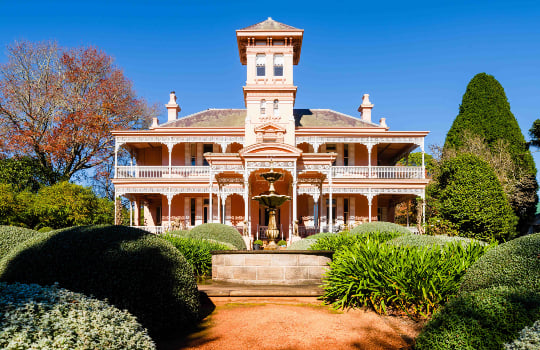
Uncover amazing stories every moment. Visit one of the 300 National Trust properties that tell the story of Australia’s heritage, the memories, celebrations and history through the buildings and landscapes and the people who lived and worked in them.

Working together, the National Trusts of Australia also actively conserve Australia’s heritage (places, objects, things- physical and intangible) through advocacy and learning, research, on-ground conservation works and promotion. Through their on-site and other education programs, the Trusts aim to explore the past, illuminate the present and imagine our future heritage. Our vision is a nation celebrating and conserving its cultural, Indigenous and natural heritage for present and future generations.

We value aesthetic appeal, new ideas, innovation and creativity. We challenge you to be innovative and creative in your choice and depiction of the subject of your investigation.

What can you tell us about Celebrations, memories and history in Australia’s heritage that relates to a specific event, place, topic, object or person in Australia’s diverse heritage?

PRIZES FOR NATIONAL TRUST SPECIAL CATEGORY “AUSTRALIA’S HERITAGE”


All participants receive a Certificate.

$200 for each State/Territory Winner at State/Territory Presentation.

$300 for the National Winner at the national presentation in Parliament House during a cultural and sight-seeing visit to the nation’s capital.

Additional cash prize for Best Entry Using a Trust Resource from the State and National Winners.
 
In addition, individual State and Territory Trusts may offer special prizes and opportunities for students in their state or territory entering the Trust’s Australia’s heritage special category and using National Trust resources or meeting other specified conditions.

For example, the ACT Trust is offering an additional prize to high school students in the ACT who submit a research essay addressing the Challenge and Trust themes. In addition to entering the Challenge, a copy of the essay should be submitted to the National Trust of ACT either electronically or in hard copy. Students can enter the ACT Trust essay competition without entering the challenge. This gives students whose entries are not chosen by their schools to be entered to the Challenge a second opportunity to win a prize. Entrants are strongly encouraged to use the ACT Trust’s historical resources. A cash prize of $200 will be offered to the winning entrant and the essay will be published in the ACT Trust journal and on the website. This prize is in addition to any others that may be won in the History Challenge, and in addition to the extra National prizes offered by the Australian Council of National Trusts. For further details contact Peter Dowling
 
Contact your state or territory Trust for more information.
ACT    |    NSW   |   NT     |    QLD    &    Currumbin Wildlife Sanctuary     SA    &  Ayers House Museum    TAS     |   VIC     |    WA    

NEXT STEPS


Presentation format

What is heritage?

Celebrations, Memories and History - what to choose?

Your ‘National Trust' challenge (including examples with links)

What is a National Trust Resource?

Things to consider

Further information and resources

Important dates

Find out more

Contact details

PRESENTATION FORMAT
Write an essay, or produce a newspaper article, DVD, PowerPoint presentation, book, 3D model, museum display, interactive, diary, website/page, theatrical performance, film, display board etc – the choice is yours!
You must use the medium effectively, and whatever you choose, you must investigate and research the topic and indicate this research in your entry.
More information on the requirements for each type of presentation format can be found on http://historychallenge.org.au/   

WHAT IS HERITAGE?
Heritage is something we inherit from the past and value enough today to leave for the future.
It is the tangible and intangible pieces of information and memory left behind to guide us into lives once lived and places and objects as they once were.
Heritage can be found in the tangible or intangible reminders of our past in
•    physical buildings and monuments, or physical aspects of the natural heritage (landscapes, trees, forests, bushland, biodiversity, fauna and flora, rivers, geology, ecosystems etc)
•    documentary records – letters, papers, newspapers
•    personal stories and memories passed from one person to another
•    language, traditions, play and music
Heritage may be personal, or may be significant to a whole community. Your project may look at heritage related to the lives of significant individuals or may be related to politics or events which have impacted on or been celebrated in communities, creating nationally or internationally significant heritage. Remember, tomorrow’s heritage is created today.
Australia has a rich multicultural and Indigenous heritage. The National Trust has properties that celebrate this significant heritage and has classified and campaigned to conserve our shared Australian heritage.

CELEBRATIONS, MEMORIES AND HISTORY - OUR AUSTRALIAN HERITAGE’ – WHAT TO CHOOSE?

The theme for the 2010 National History Challenge is “Celebrations, Memories and History”. The National Trust is asking you to consider this theme through its relationship to Australia’s heritage.
 
This provides a tremendous opportunity to investigate people, places, events, objects, documents and other records which have left tangible or intangible traces in our Australian heritage and how this has influenced the past, present and may influence the future.
How have the celebrations, memories and stories of people and places in our history left their mark in Australia’s heritage? Of the many stories, some are well-known, others need to be told. All Trust properties will have their own stories waiting for you to bring them to life. You can examine National Trust campaigns and festivals that have celebrated and conserved heritage in our memories and history. These stories present a substantial diversity of events that can be examined in your project.
 
You may like to consider a range of these and examine the effect they've had upon Indigenous and non-Indigenous cultures, society, environment and government.
You may find controversial histories to examine, for example an event may be a celebration to some part of society but not to others, for instance Australia Day.  Or perhaps your entry could celebrate and examine the life of someone who has had an impact on a part of Australia’s heritage eg Bon Scott from AC/DC whose grave in Fremantle was heritage listed in February 2006 for his contribution to Australia’s musical heritage.
 
YOUR NATIONAL TRUST CHALLENGE

You are invited in this special category of the National History Challenge to research a topic looking at how Australia’s heritage has been celebrated, remembered and commemorated in history.
You are strongly recommended to use National Trust resources. Unlock the amazing stories in every moment of history with the National Trust.
You might choose to research one of the following objects/themes from National Trust properties or classified registers or heritage conservation campaigns or Heritage Festivals: You can choose from anywhere in Australia. You are not restricted to Australia’s Heritage in your own State or Territory and you can look at a broader sub-topic of Australia’s heritage across States and Territories.
Some additional themes you can link to in 2010 include the International Year of Biodiversity, celebrated in National Trust nature and wildlife reserves, International Year of Communications, and International Year for the Rapprochement of Cultures.
Our nature reserves commemorate the lives of pioneer environmentalists as well as celebrating biodiversity. Many of our properties, classified places and campaigns conserve and celebrate our rich multicultural heritage that has contributed to our Australian identity. Other places are commemorated for their contribution to communication in Australia’s heritage.
The National Trusts collectively own and manage over 300 properties together with extensive cultural heritage collections. These properties and collections are an integral part of Australian life and play a role in documenting and interpreting Australian identity, values and achievement. Properties include nature and wildlife reserves as well as domestic, commercial, industrial and official and institutional buildings from a wide range of cultures. 
Through our properties the National Trusts tell the stories of our cultural heritage and identity- amazing stories every moment. National Trusts have also classified many heritage places which are also connected to stories and other intangible heritage.

EXAMPLES FROM THE NATIONAL TRUSTS OF AUSTRALIA 

To help you choose your topic, follow the links below for specific examples from the National Trust and other important information in your State or Territory.

ACT            
NSW        
NT           
QLD           
SA            
TAS           
VIC           
WA           


OUR CAMPAIGNS AND CONSERVATION PROGRAMS


There are some good topics in the Our Heritage at Risk program or from the earlier Endangered Places program. Please explore these sites as a basis for your research. Can you find stories of successful campaigns- celebrations- amongst the heritage nominated for Our Heritage At Risk and Endangered Places programs or from the advocacy, campaigns and conservation pages of the Trusts?
Follow these links to Trust campaigns.

    Heritage at Risk
    Endangered Places
    ACT
    NSW
    NT
    QLD
    SA
    TAS
    VIC
    WA

Some specific examples include:
 
Lawson Community Hall (Mechanic’s Institute)
Built in 1903, the Lawson Mechanics Institute had a central position in the 20th century evolution of the village of Lawson. The building provided facilities for library, meeting hall and recreation that was supported and sustained by local community activity. The building is evidence of an education movement in NSW that saw the establishment of Schools of Art and Mechanics Institutes throughout the late 19th and early 20th century. The building has landmark value at the entrance to the town of Lawson but was proposed for demolition in association with road widening works. After a hard fought campaign by the local community this decision has been reversed and the Lawson Community Hall will be retained and conserved.

Wollongong Town Hall Pipe Organ 
The Wollongong Town Hall Pipe Organ was the first to be commissioned for a Town Hall in the 20th Century in NSW. The pipe organ was built by Ronald Sharp, immediately before he built the Grand Organ in the Sydney Opera House. The organ is the largest mechanical tracker action organ in the world. It is considered to be of national significance and international acclaim, and is well regarded for its tonal qualities. The organ was built in situ in the main hall and was tuned to be acoustically matched to that hall. The hall and organ are integral to each other. The Wollongong Town Hall was proposed for demolition and the future of the organ was uncertain. That decision has now been reversed following the intervention of the Wollongong Council administrator Gabrielle Kibble.

The above examples are from NSW and more information on these is available from the NSW National Trust. For other examples look at the State and Territory Trust sites to see what issues they have been campaigning to conserve and preserve.  Look at the classified places- many of these were saved from destruction by actions by the National Trust and the community- places like Queen Victoria Building in Sydney, or Lanyon Homestead in ACT. Maybe you could look at the story of how the National Trust began. You are not restricted to your state or territory for your topic.

WHAT IS A NATIONAL TRUST RESOURCE?

If your entry deals with part of Australia’s heritage and uses a National Trust website, National Trust registered building or Trust owned property, a National Trust resource, book, library or publication in its research or production, you have used a National Trust resource.
 
The National Trust has properties that celebrate our Australian heritage and has classified and campaigned to conserve this significant heritage. Throughout Australia the State and Territory National Trusts own and manage over 300 properties and collections which tell the amazing stories of Australia and her people at each moment of history. The National Trusts actively conserve, research, classify and advocate for conservation of significant cultural, built and natural heritage. National advocacy and education programs include Our Heritage at Risk and its predecessor Endangered Places. All State and Territory Trusts have education programs, many at National Trust properties. In addition the Trusts have published books, technical brochures etc and produces National and State/territory Trust magazines. The National Trust also operates retail outlets at heritage properties and runs heritage and cultural tours and events. The ACNT and State and Territory Trusts maintain libraries, archives and records.
 
All or any of these can be used to assist your project.


You have used a Trust resource if you have
 
•    visited a National Trust property or

•    researched a National Trust collection or

•    looked at material in a National Trust library, archives or records or
•    read a Trust publication or

•    used a National Trust website or
•    researched a conservation issue the Trust has been involved in or a Trust campaign, including Our Heritage at Risk
•    researched a property or collection classified by the National Trust or a person involved with a Trust classified place or

•    researched a place that the Trust has worked on- eg the National Trust has recommended a place for State, local or National Heritage listing or

•     researched a person who is associated with any of the above and 

•     have provided evidence of using a National Trust resource.


For more information on National Trust resources contact your State or Territory National Trust office or the Australian Council of National Trusts.
 

THINGS TO CONSIDER

In researching your project, it is important to recognise that there may be a range of different historical, social and political perspectives that you will need to consider.
 
There may also be a variety of evidence that you need to present, which illustrates different points of view on the topic you have chosen that relates to ‘Celebrations, Memories and history.’

 You should combine historical research into the event or account dealing with “Celebrations, Memories and History” with an examination of the resulting heritage to produce a creative, insightful and engaging report in what ever format you choose- essay, 3D museum display/model, performance, multi-media.
Be sure to:

•    identify how your project meets the theme ‘Celebrations, Memories and History’
•    identify the Australian heritage aspects
•    focus on testimony/witnesses to the story
•    identify any social significance of your story; including its effects on values, attitudes and beliefs
•    show a variety of evidence
•    use primary and secondary sources
•    give your own opinion
•    include community responses
•    identify (and reference) aspects relating to the National Trust- National Trust properties, Trust classified places, campaigns, collections, objects, archives,             publications, etc
•    identify any government involvement
•    correctly reference your work
•    In selecting stories, images, places, people or objects to investigate, ensure that you place them within an appropriate historical and social context and relate this  to Australian heritage.
   

Consider the following:

•    What stories do you want to tell?
•    How did the events portrayed affect our heritage?
•    What message do you want to convey?

•    Who is your audience?

•    What look and feel do you want your entry to have?
•    How does this reflect the content?

•    How would you like your audience to interact with your entry? For some formats  (eg a website, DVD or 3D model) you could consider building an interactive element into your entry.


In addition, you should ensure that:

•    your entry is supported by historical research
•    you have examined a wide range of primary and secondary sources
•    you identify the heritage that was formed or changed by the story you tell
•    there is continuity of language and style throughout your entry
•    all textual references, objects, images, audio etc, are sourced and accredited
•    your entry complements the materials/information it presents in both format and content
•    for formats other than a research paper,  there is a balance of text/ objects/ images/audio etc
•    for a model or museum display, labels are relevant and appropriate and support the evidence. Consider the length of your labels – how much text will your audience read?
•    most importantly, be creative!

FURTHER INFORMATION AND RESOURCES

In researching the topic and developing your response, visit your local branch or State/Territory head office of the National Trust or visit a property or range of properties to find that special story of Triumph over adversity. If there are no properties near you, there may be a local heritage place or story waiting to be told. Look up Trust properties and campaigns on our websites. You can access your state or territory website from the Australian Council of National Trust’s website . Contact details of the State and Territory Trusts are given below.  Or look at Our Heritage at Risk program website for stories about successful campaigns (and some not so successful).  The National Trusts have many resources on the web that will give you access to many more stories that depict triumph over adversity. 
 
Other organisations, such as National Archives, State and National Libraries, and museums can also be accessed via their websites or visited to assist your research for your entry in the Australian Heritage category of the History Challenge. Look up the Australian Heritage Database on the Department of Environment, Water, Heritage and the Arts (DEWHA) website for heritage places in all parts of Australia and for links to other heritage sites and lists: www.environment.gov.au/heritage
 
EDUCATION PROGRAMS

All State and Territory Trusts have education programs covering a great range of subjects and complementing state, territory and national curriculum. Many programs are based at specific properties. You can find out more from the education pages on the Trust websites.    

CLASSIFIED REGISTERS

There are many examples among the places on National Trust and government registers.

    National:
    http://www.nationaltrust.org.au/Conserve       
    www.environment.gov.au/heritage/ahdb/index.html
    www.environment.gov.au/heritage/places/commonwealth/index.html
   
    ACT:
    nationaltrustact.org.au/?pageid=21
    nationaltrustact.org.au/index.php?pageid=42           
    nationaltrustact.org.au/index.php?pageid=29
   
    NSW:
    NT:      
    QLD: 
    SA:    
    TAS: 
    VIC:   
    WA:   
   
IMPORTANT DATES

February 2010           Brochure posted to all schools
February 2010           National History Challenge website live
27 August                  Closing Date for entries
September/October   State and National Judging
October                      State Presentations
Mid-October               National Winners notified
23 November             National Judging at Parliament House


FIND OUT MORE ABOUT THE NATIONAL HISTORY CHALLENGE

See projects that have won the ‘Australia’s heritage' prize.


CONTACT DETAILS

For more information contact:


Maree Treadwell
 ACNT
 02 6247 6766
mtreadwell@nationaltrust.org.au
www.nationaltrust.org.au
Australian Council of National Trusts

PO Box 413

Campbell ACT 2612

Or contact the National Trust in your state or territory:

ACT 

02 6230 0533

info@nationaltrustact.org.au   
nationaltrustact.org.au
nationaltrustact.org.au/?pageid=26
National Trust of Australia (ACT)

PO Box 1144

Civic Square
ACT 2608

NSW

02 9258 0123

reception@nationaltrust.com.au   
ahoward@nationaltrust.com.au
nsw.nationaltrust.org.au
nsw.nationaltrust.org.au/education/default.asp
National Trust of Australia (NSW)

GPO Box 518

Sydney NSW 2001

NT

08 8981 2848

foh.ntnt@internode.on.net
nationaltrustnt.org.au
nationaltrustnt.org.au/index.php?/eng/Left-Menu/Education

National Trust of Australia (NT)

GPO Box 3520

Darwin NT 0801

QLD

07 3223 6666
info@nationaltrustqld.org
nationaltrustqld.org
cws.org.au/getcloser/discover_more/
National Trust of Australia (QLD)

GPO Box 838

Brisbane Qld 4001

SA

08 8202 9200
admin@nationaltrustsa.org.au
nationaltrustsa.org.au
ayershousemuseum.org.au/education
National Trust of Australia (SA)

Beaumont House

631 Glynburn Rd

BEAUMONT SA 5066

TAS

03 6344 6233
admin@nationaltrusttas.org.au 
 nationaltrusttas.org.au
nationaltrusttas.org.au/education.htm

National Trust of Australia (Tas)

413 Hobart Rd

Launceston Tas 7520

VIC

03 9656 9800
info@nattrust.com.au
martin.green@nattrust.com.au
nattrust.com.au
nattrust.com.au/education
nattrust.com.au/education/national_history_challenge
National Trust of Australia (Victoria)

4 Parliament Place

East Melbourne Vic 3002

WA

08 9321 6088
trust@ntwa.com.au
ntwa.com.au
valuingheritage.com.au
National Trust of Australia (WA)

PO Box 1162

West Perth WA 6872


Print this page