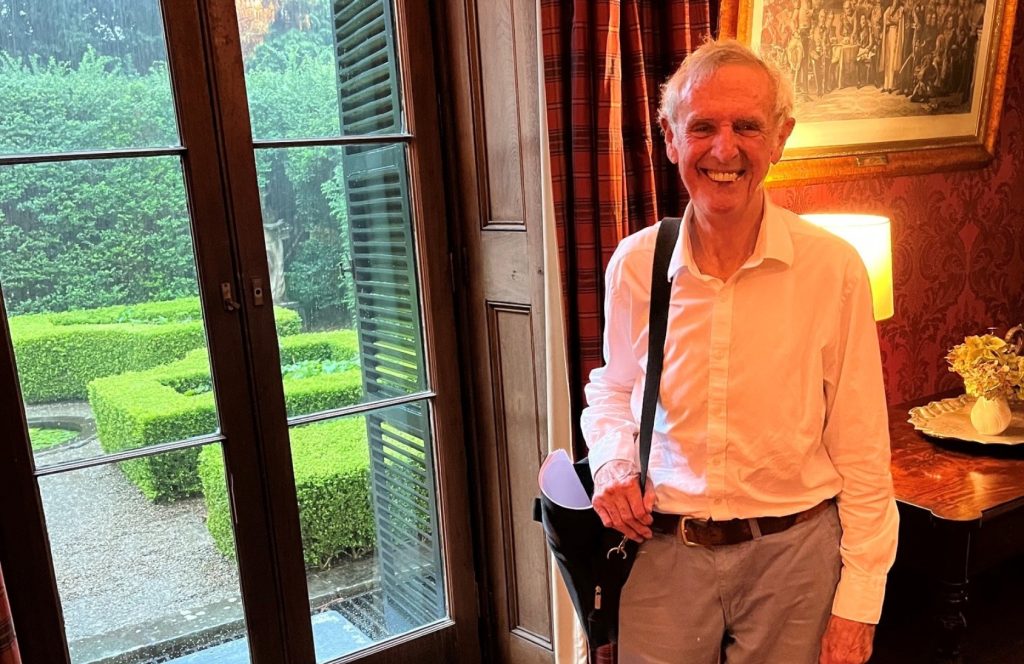
Michael Dysart was an influential Sydney modernist architect best known for his work with the Government Architect’s Office, as well as his later collaborations with Ken Woolley and Brian Pettit and Ron Sevitt, founders of the influential model home company Pettit+Sevitt.
Born in the UK, Michael was passionate about creating modern, integrated living spaces that embraced natural light and an open-plan design but with intimate, secluded nooks. Often regarded as a pioneer of Australian Brutalism, he championed affordable, well-designed homes built with locally sourced natural materials.
Michael and his wife, Dinah, were a dynamic and cosmopolitan couple. Dinah was editor of Art + Australia magazine, and a director of the S.H. Ervin Gallery. Together they were prominent figures in Sydney’s cultural and architectural circles.
Even late in life, Michael continued to receive recognition for his work. His sustainable house at Wagstaffe won acclaim in 2009, reflecting his enduring commitment to thoughtful and environmentally responsive design.
In mid-2025, Michael participated in a series of oral history interviews with the National Trust at Lindesay. The irony was not lost on him: his own design for the neighbouring modernist Wain House, completed in 2006, was, as Michael himself observed, “the opposite of Lindesay.”
Here Michael opens up about some key moments in his life.
Listen now
Travels
Harry Seidler
Learn more
The National Trust (NSW) oral history project aims to capture the stories of Australians who are involved heritage conservation, are a significant custodian of a site, knowledge or event, or have a long history with the National Trust.
Each of these oral histories delve into a person’s life story, and are recorded as a long-form interview. Explore other recordings in the series.
If you would like to use these recordings, please contact the National Trust archives.
