From intimate portraits to celebrated prints, art brings our historic places and their former owners to life. Discover some of the significant works that are the subject of this year’s fundraising appeal.
By Michelle Bateman, Editor, National Trust (NSW) magazine
A painting, drawing or sculpture can reveal as much about a historic house as its architecture or furniture, offering clues to the tastes, travels and social worlds of the original owners. Together with the rooms in which they’re displayed, they help us understand “the whole history of the place”, says Craig McPherson, Senior Curator, Conservation at the National Trust.
The National Trust collection is privileged to hold hundreds of artworks; “it’s one of the largest collections outside a government institution,” McPherson says. Many have survived for generations within our special places, where changing climates, natural ageing and the particular conditions of each house create complex conservation needs.
“It’s not a one-size-fits-all approach,” says McPherson. “There are so many variables that come with the different types of properties that we care for.” Some works now require specialist conservation treatment to address issues including mould, foxing, ageing backing materials and glazing that no longer provides adequate protection. By acting now, we can help prevent further deterioration and present these artworks more clearly within the houses whose stories they help tell.
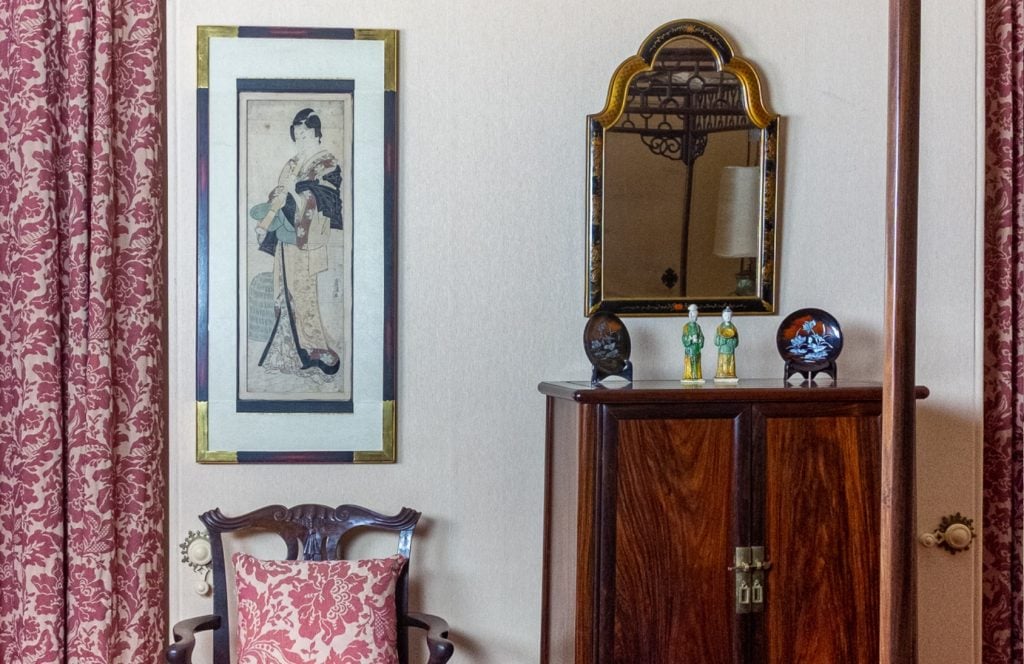
Two Japanese woodblock prints
Kitagawa Utamaro and Utagawa Toyokuni I, woodblock prints, Retford Park
The ukiyo-e prints at Retford Park reflect the long-standing interest of James Fairfax AC in Japanese art and culture. One is a long, two-sheet format titled Young Man Playing Shakuhachi. The other, Female Amusements of the Five Festivals, is a signed work by Kitagawa Utamaro, one of the most celebrated artists of Japan’s Edo period.
“Utamaro stands at the top,” says Galleries Director Jane Watters, who places him alongside Katsushika Hokusai and Utagawa Hiroshige among the three most revered ukiyo-e artists. He was particularly renowned for bijin-ga, or pictures of beautiful women, a genre represented by this festival scene.
McPherson says the works are important not only in their own right but also because they help us understand how Fairfax lived with art and his enduring interest in Japan. Preserving these prints helps retain the connection between collector, collection and place, McPherson adds.
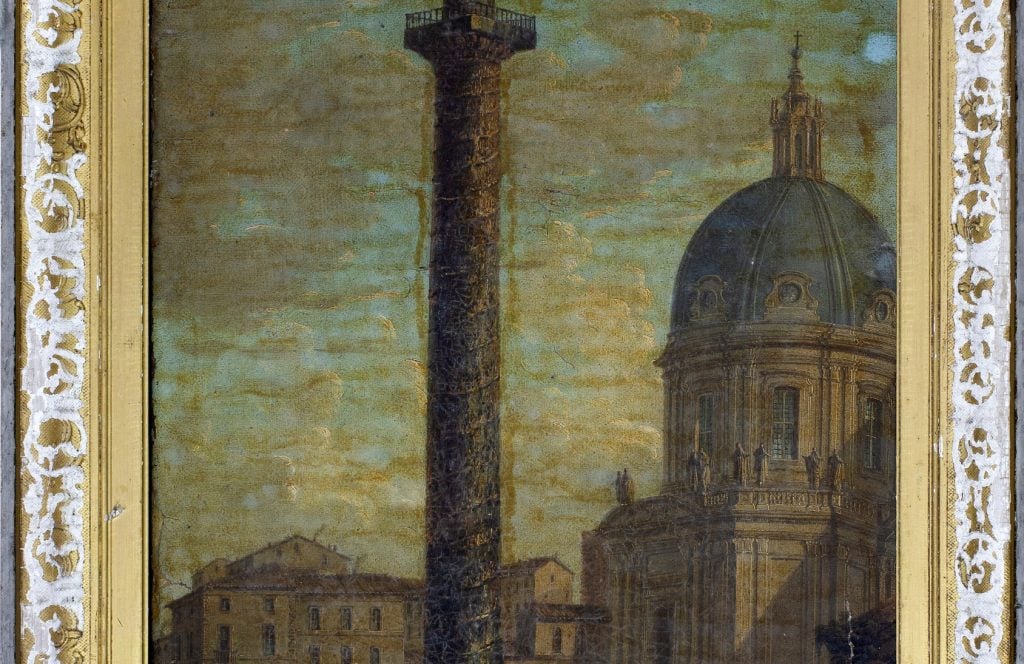
Trajan’s Column, circa 1820
Artist unknown, oil painting, Woodford Academy
Painted around 1820, Trajan’s Column depicts one of ancient Rome’s most celebrated monuments and is based on an engraving published that year in Matthew Dubourg’s Views of the Remains of Ancient Buildings in Rome and Its Vicinity. The work forms part of Woodford Academy’s substantial art collection, much of which is still being researched. Interest in the collection intensified after the rediscovery of a rare 17th-century painting by a Dutch still-life master, which was conserved following a previous National Trust appeal.
McPherson describes Trajan’s Column as another “striking work” from a collection that continues to reveal new layers of significance. Conservation will not only protect the painting and repair the frame but also allow closer examination, helping us better understand its origins, importance and place within the wider Woodford Academy collection.
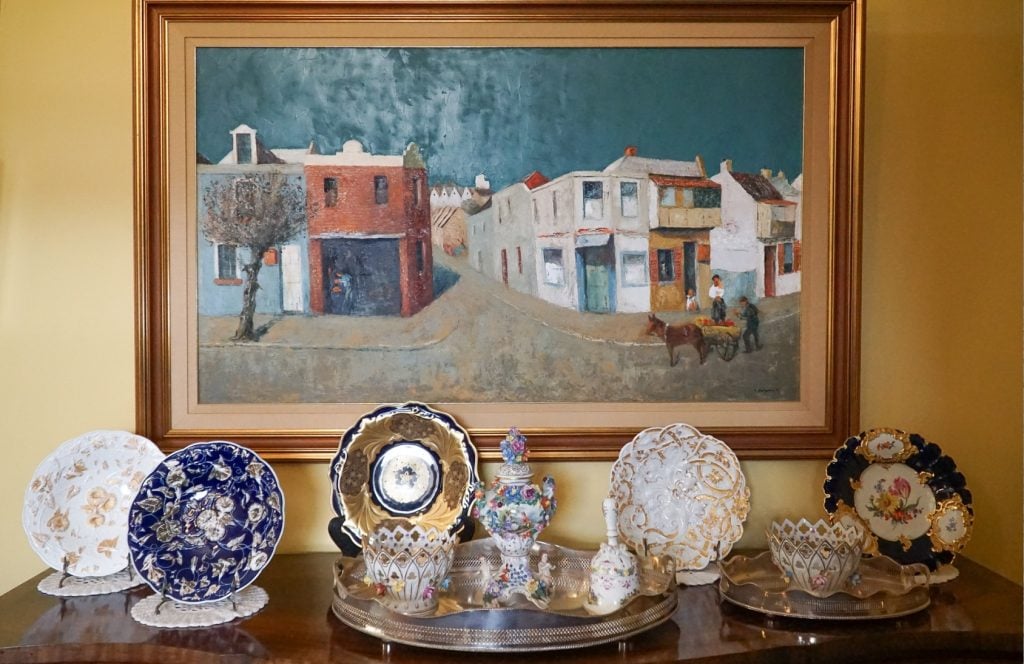
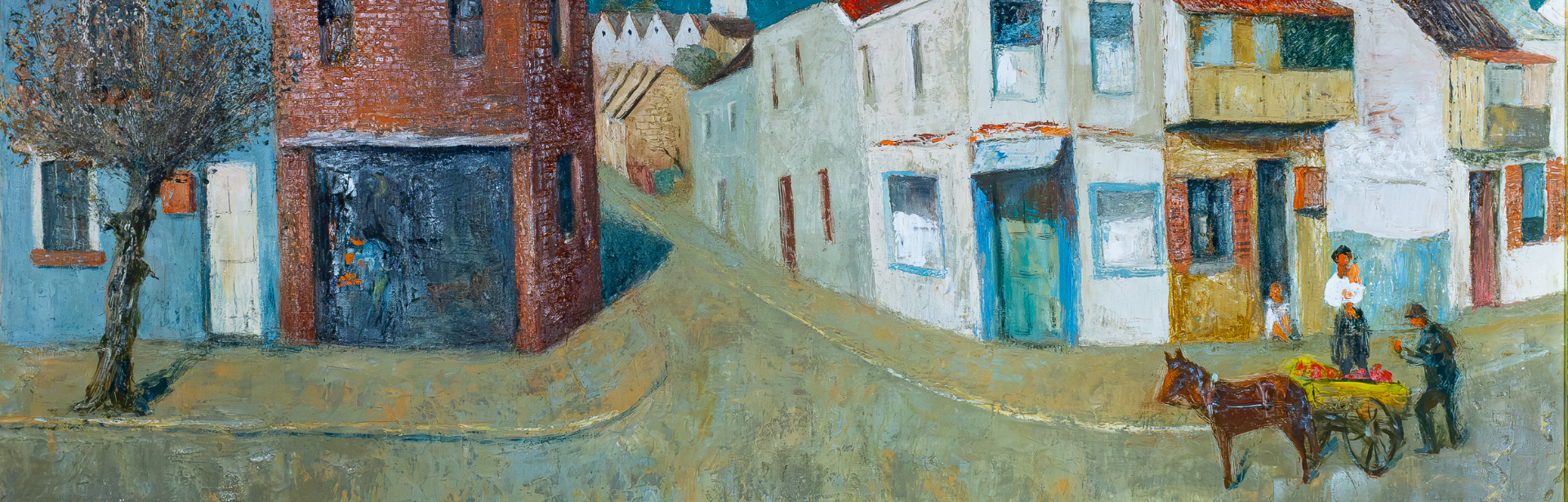
Street Scene, 1974
Sali Herman, oil painting on canvas, Golden Vale Homestead
With its earthy colours and closely packed buildings, Sali Herman’s Street Scene captures the kind of inner-city neighbourhood for which the artist became best known. The Swiss-born Herman arrived in Australia in 1937 and later served as an official war artist, with several of his works entering the Australian War Memorial collection.
Painted in 1974, Street Scene also reflects the Hon. Geoffrey Keighley OAM’s thoughtful approach to collecting. A keen artist himself, Keighley – who was the last owner of Golden Vale Homestead – maintained a studio above the stables, which remains, complete with his sketchbooks, paints and easels. Nick Corbett, General Manager Properties, South, describes Herman’s scene as “familiar yet nostalgic”, preserving a streetscape of modest, individual buildings that have increasingly been replaced by concrete and glass.
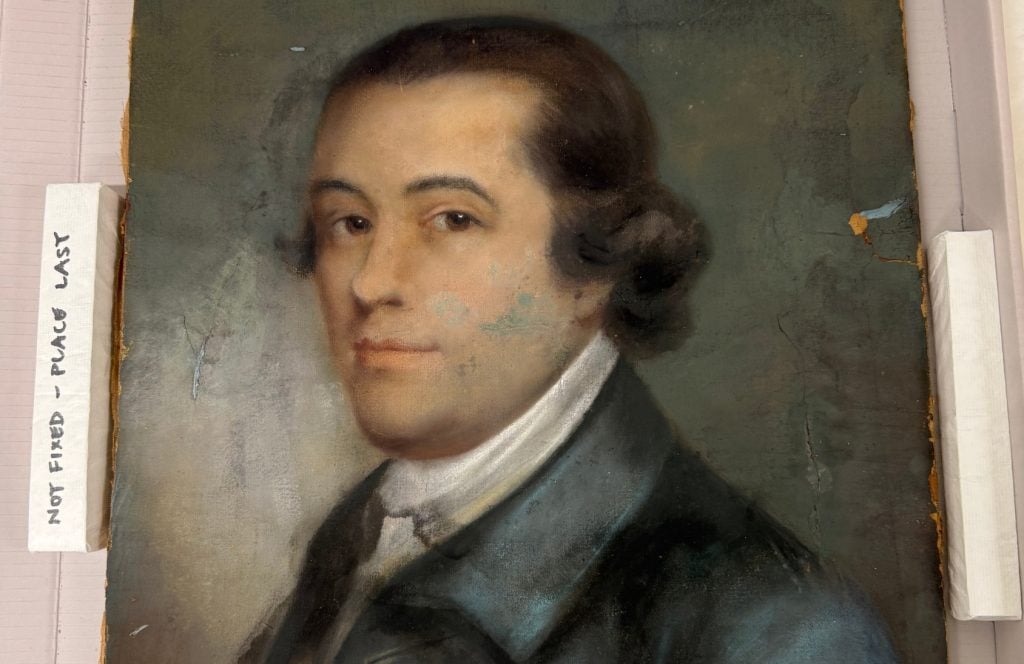
Portrait of Mr Abraham Favenc, 1764
Daniel Dodd, pastel drawing on paper, S.H. Ervin Gallery Collection
“This is an unusual piece for our collection because of its date,” says Watters of this 1764 pastel portrait. The sitter, Abraham Favenc, was born into a Huguenot family in France before becoming a silk weaver and broker in London. The portrait is attributed to Daniel Dodd, whose surviving pastels are exceptionally rare.
A leading specialist in 18th-century pastel portraiture believes the work’s rarity and distinguished sitter justify every effort to conserve it. Favenc married Judith Bourdillon in the year it was made, suggesting the portrait may have been commissioned for their marriage. Its Australian connection may lie with their great-grandson, explorer Ernest Favenc, although further research is needed.
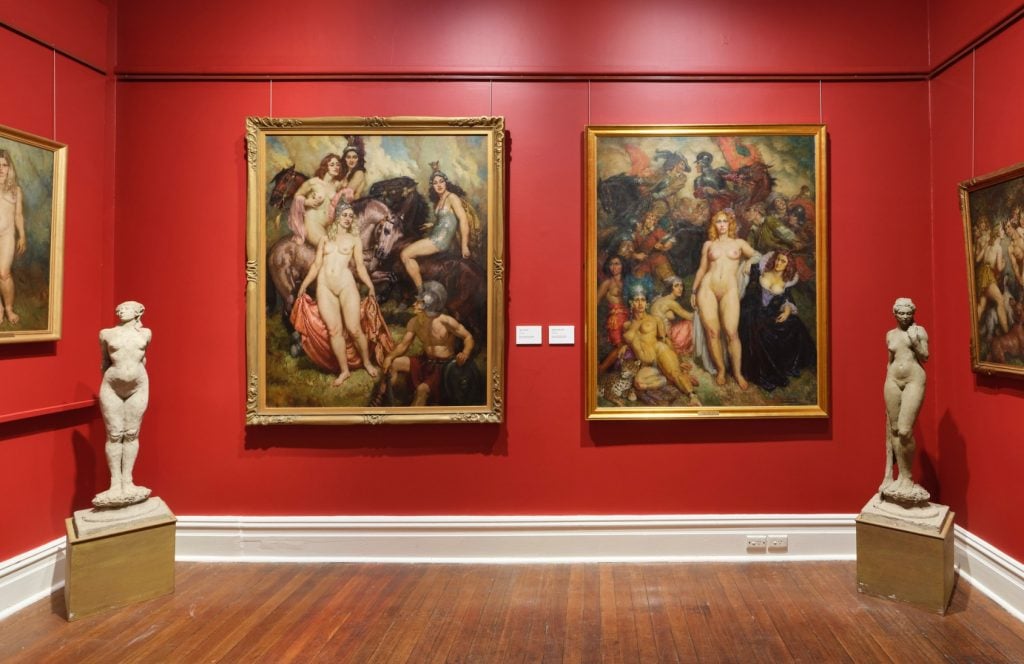
Five sculptures
Norman Lindsay, cement sculptures and plaster maquettes, Norman Lindsay Gallery
At the Norman Lindsay Gallery in Faulconbridge, the connection between artist and place is especially clear. More than a dozen sculptures are set throughout the grounds, with further works displayed in the main gallery, including these five studies of the female figure. Three are plaster works and two are cement sculptures built over metal armatures, showcasing the sensuous female figures, expressive poses and carefully orchestrated groupings for which Lindsay is renowned.
The sculptures also belong to the wider artistic landscape Lindsay created at Faulconbridge. Operations and Events Manager Zoe Jerrat says that, over decades, he designed and built much of the property himself, adding retaining walls, Roman-style gardens, pools, pergolas, fountains, statues
and urns. As McPherson adds, the art, house, furnishings and garden form “the whole package”, helping us understand both Lindsay’s work and the world he created around it.
This story originally appeared in the October 2026 – January 2027 issue of the National Trust (NSW) magazine.
We need your help
The National Trust cares for one of Australia’s largest art collections outside government institutions. Within our galleries, gardens and house museums, artworks do far more than decorate a room. They reveal the tastes, travels and lives of the people who once lived there, helping us understand each place in richer and more meaningful ways.
However, some of these rare and precious artworks are now at risk. Light, mould and the natural conditions of heritage buildings can cause fading and deterioration that may become irreversible without specialist conservation. Frames and sculptures are vulnerable too, with age and changing conditions causing cracks and damage to fragile surfaces and finishes.
Help us raise $150,000, before 31 December 2026, to conserve and protect significant artworks for generations to come.
Please donate to the National Trust’s Artwork Appeal today.
Discover more in the National Trust (NSW) magazine
Want to read more fascinating stories about heritage? Become a member of the National Trust (NSW) to receive a printed copy of the National Trust (NSW) magazine.
 Facebook
 Linkedin
 Email
