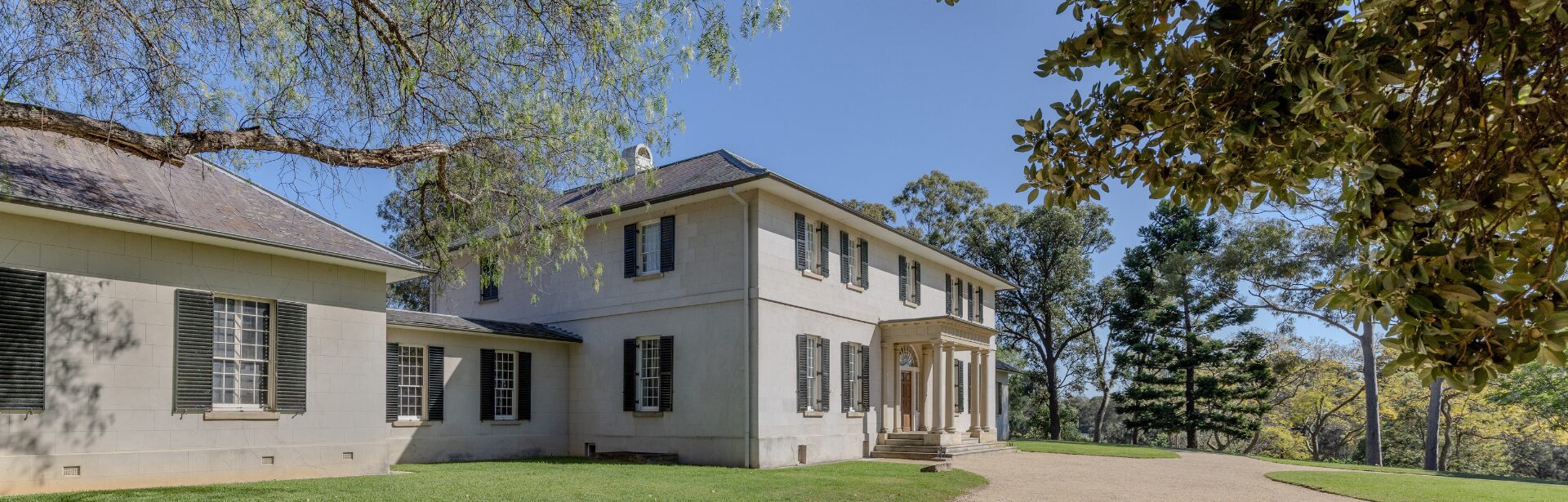
We reveal the results of a recent conservation project undertaken at Old Government House.
![[Old] Government House, Parramatta, 1805 by George William Evans, Mitchell Library, State Library of New South Wales](https://www.nationaltrust.org.au/wp-content/uploads/2026/02/Website-ImageTile-540-x-350-1-1-1024x664.jpg)
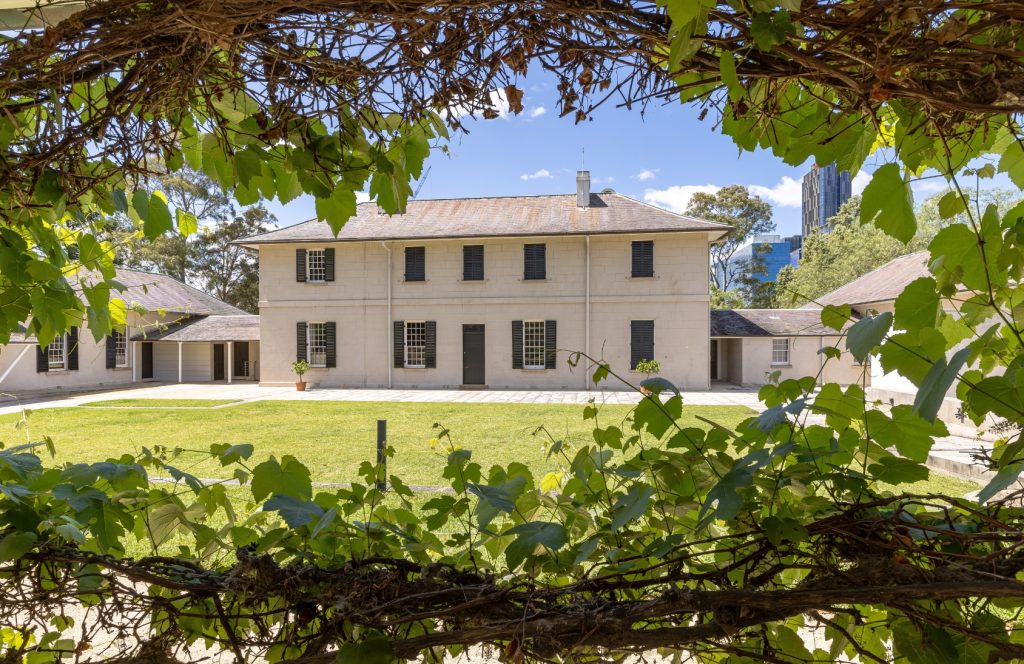
Situated on the traditional land of the Burramatta People, who lived in the area for 39,000 years prior to the arrival of Europeans, Old Government House and the accompanying Barracks buildings were built by convict labour between 1799 and 1818. One of 11 convict sites recognised in the Australian Convict Sites World Heritage series, the property offers unique insight into the forced convict migration that formed the settlement of Australia.
In 1967, Old Government House was transferred to the National Trust by an act of Parliament and, following restoration, was opened by Her Majesty Queen Elizabeth II in 1970. Since then, it has seen visitors from around the world, served as a tangible history lesson for school students and hosted myriad events drawing diverse communities together.
To ensure Old Government House continues to act as a connection between Australia’s past and its future, a series of conservation projects have recently been undertaken by the National Trust to restore and revive this significant place.
Here we reveal the results of work that has been carried out thanks to a grant from the Copland Foundation.
A heritage canvas
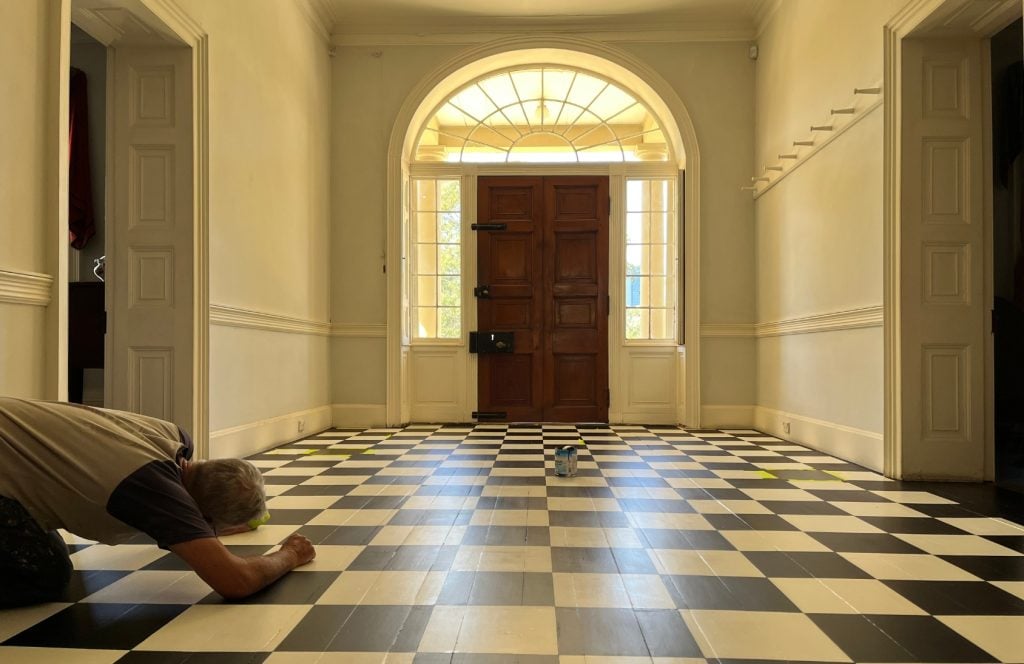
Faced with limited access to traditional European building materials, the wooden floors of the foyer of Old Government House were not laid with stone but instead painted to echo the impressive marble floors of the Georgian period. This canny example of colonial innovation has been preserved with careful repainting of the original chequerboard floor.
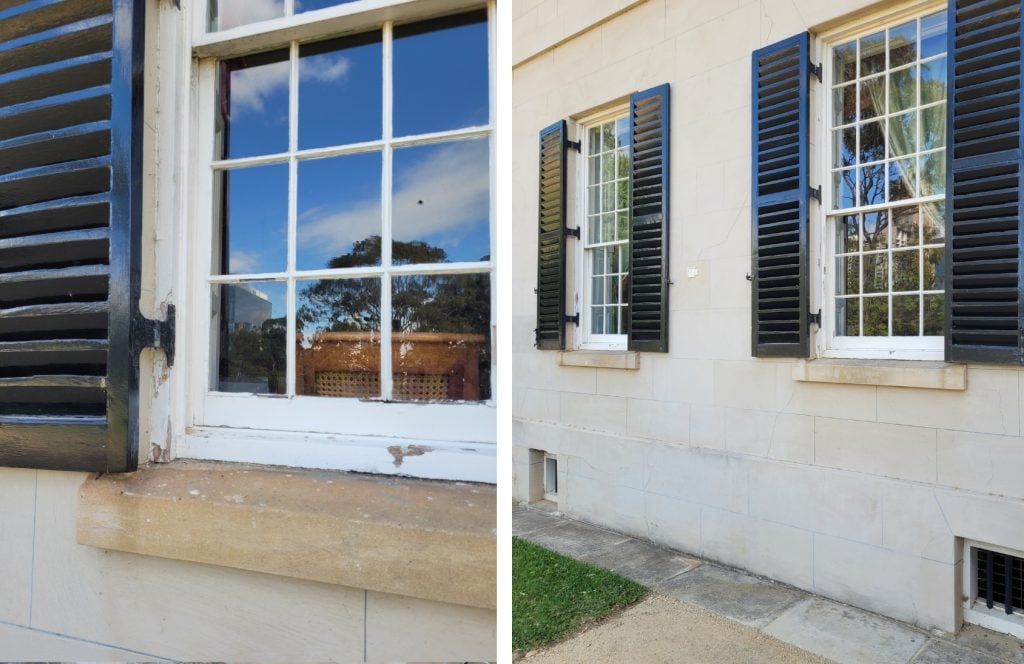
After years of use by students and volunteers, the servant’s hall and bakery in the main house have received a fresh coat of paint, while the front external windows and portico columns of the main entrance have also been repainted, reviving the classical grandeur of the front porch.
Looking at the past in a present tense
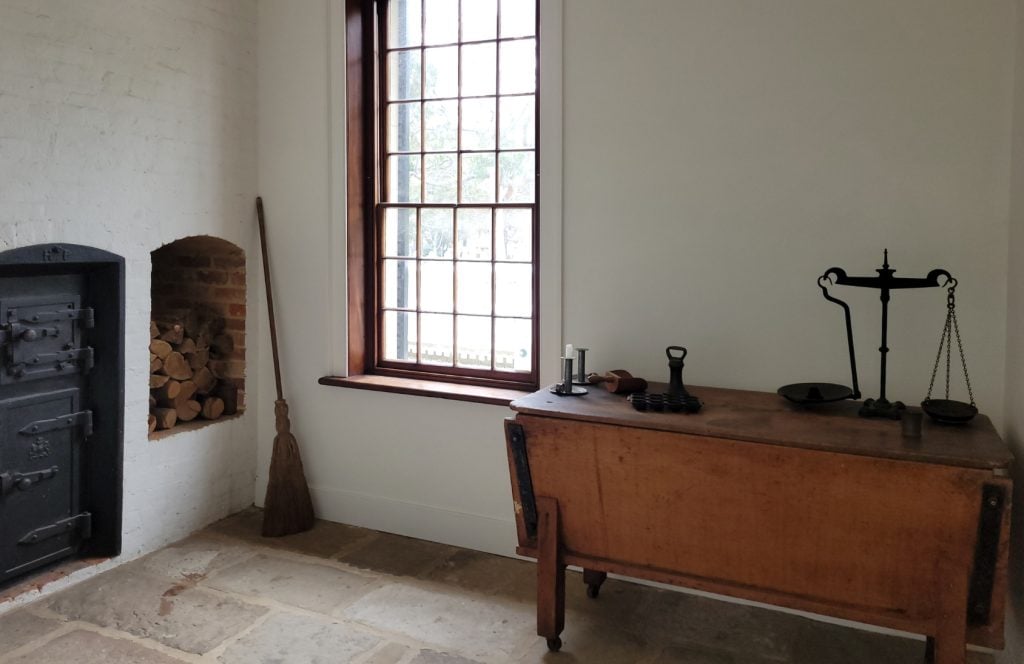
Following repainting, the servants’ wing has been furnished to allude to the time the house was inhabited by Governor Lachlan Macquarie and Elizabeth Macquarie. Based on extensive analysis into furnishings of the period, new wooden benches were made and installed. Carefully crafted by heritage furniture maker Ian Thompson of Olivardo and Co, the benches are a meticulous representation of an early 19th-century furnishing. Further content to enhance accessibility is also planned, including a 3D tour of the upstairs spaces of the house.
A different perspective
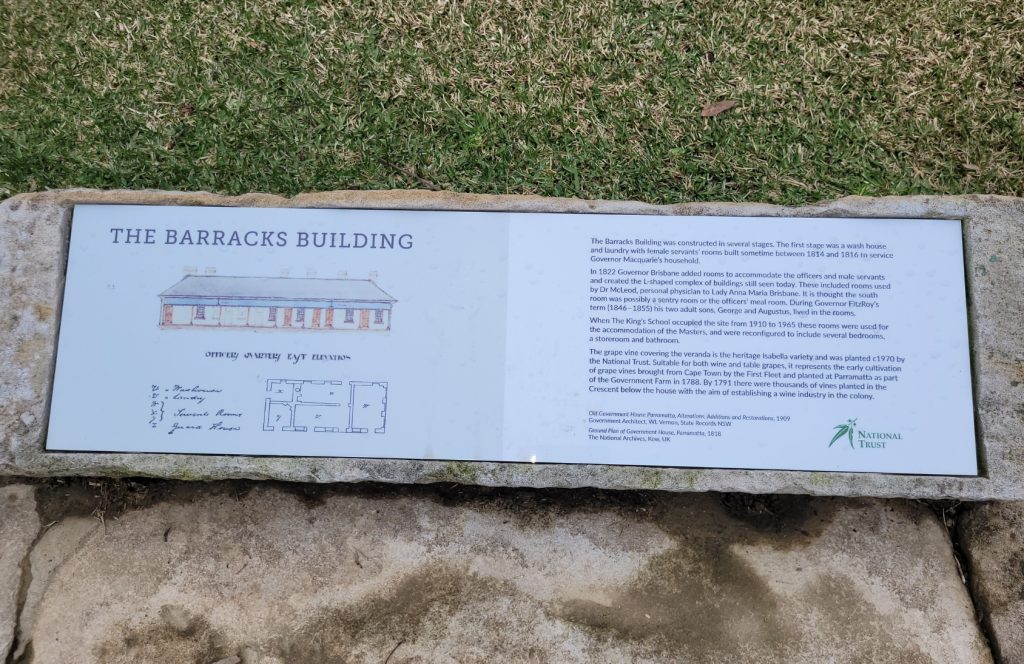
Exterior signs have been updated to guide visitors around the outside of the house and explain key features of the landscape.
Also weaving together the many stories that make up Old Government House is a new audio interpretation. Situated in the bakery and servant’s hall, the audio experience brings alive the voice of the servants who once worked in the house, enabling visitors to understand the story of this place from a perspective that has often been overlooked.
Laying the foundations
A new display case for the Barracks buildings is currently being crafted. The custom-made piece will showcase archaeological fragments from the site’s convict history. The display is intended as the starting point of the refreshed visitor experience which highlights Old Government House as a World-heritage listed Australian convict site.
Care of collections
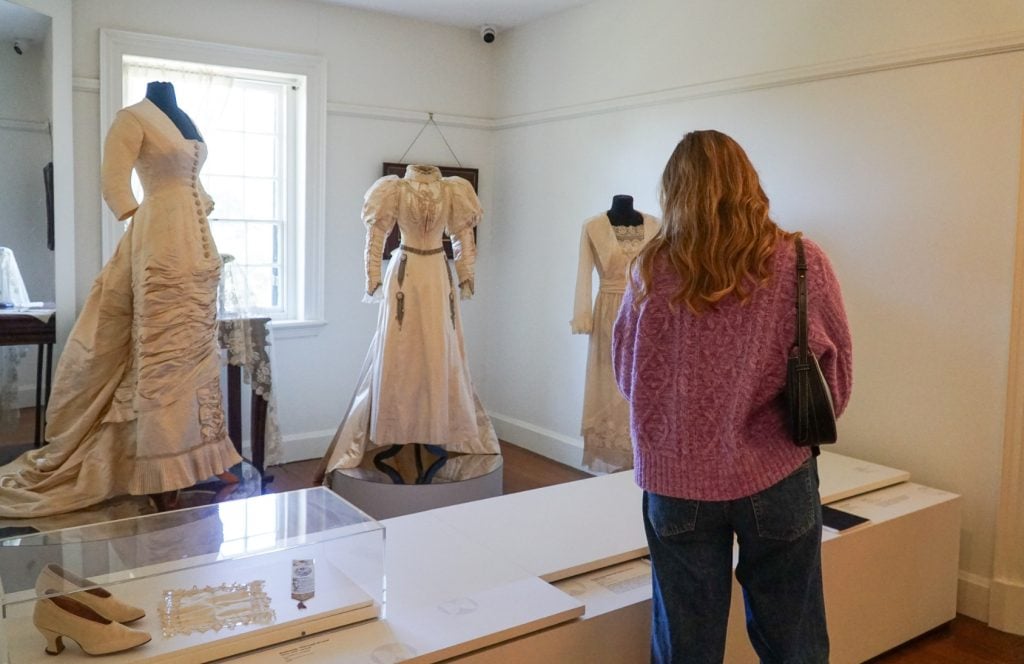
Thanks to new UV film being installed in the upstairs rooms, sensitive objects are now able to be more safely displayed with appropriate light levels, allowing stunning views out to Parramatta and Parramatta Park to be revealed in some rooms. Also enhancing the visitor experience is new exhibition lighting.
Plan your visit
Take a trip to Old Government House and discover the remarkable history of this heritage place firsthand. Bringing the family? Discover entertaining activities for children at Old Government House and other National Trust places.
The National Trust (NSW) acknowledges the traditional custodians of the land, waters and sky of western Sydney and pay our respects to all Elders past, present and emerging. We extend that respect to all Aboriginal people living in Western Sydney today.
 Facebook
 Linkedin
 Email
Email