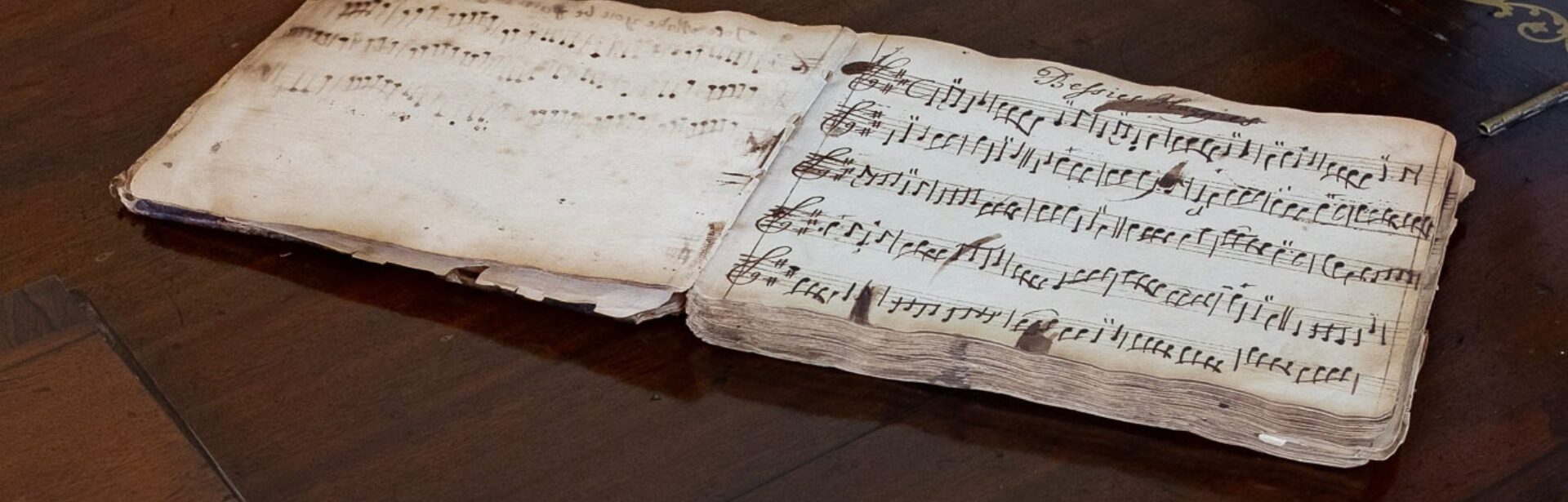
More than 250 years after it was written, a rare music manuscript from Scotland was discovered atop a piano at Riversdale. Thanks to extensive research by violinist and musicologist Shane Lestideau, its intriguing story has come to light and is the subject of an enchanting upcoming event and display.
Containing the signatures and handwriting of two women, Margrat Arthour and Helen Wight, a small practice book of instrumental tunes, songs and keyboard arrangements dating from 1734 was discovered in the drawing room of Riversdale in the 1980s. While it was clear the embossed, leather-bound book dated back several centuries, nothing was known about the identities of the women who created it, or how this unique object of Scottish musical history came to be located at Riversdale.
Fortuitously, several decades later, the book came to the attention of Shane Lestideau, a renowned Australian violinist, musical researcher and author. With a personal interest in Baroque music, Shane embarked on a project to unravel the story of the book, and the identity of its authors Magrat and Helen, who resided in Scotland during this period.
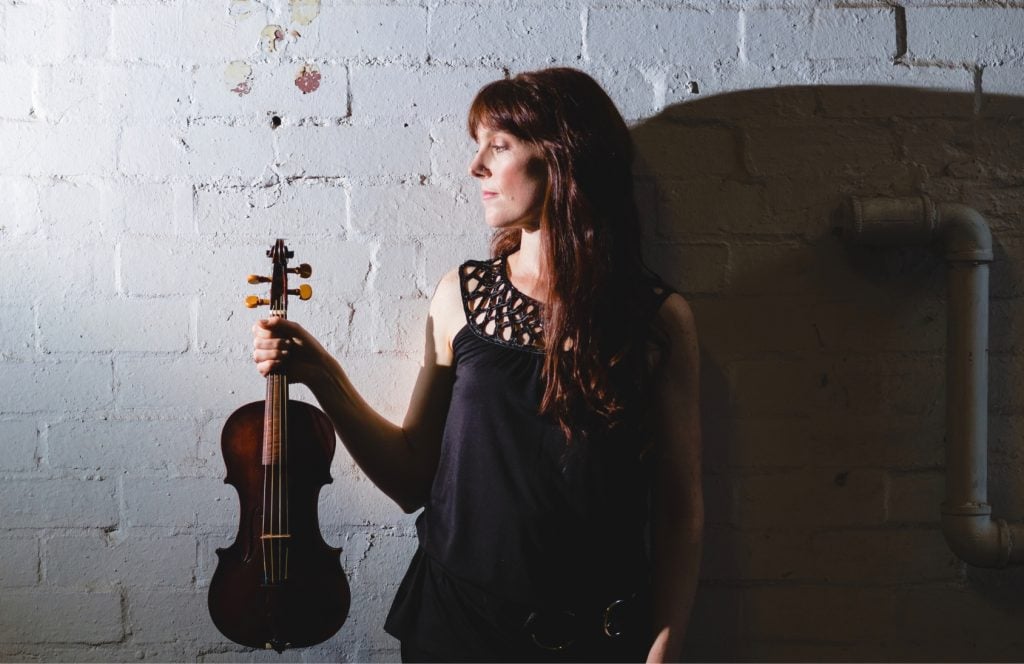
Carried out over six years, Shane’s meticulous research led her to the view that Margrat was the niece of one of Scotland’s most famous musicians, Baron Clerk. Born into Edinburgh high society and related to key characters involved in the 1715 Jacobite uprising, under Shane’s analysis Margrat emerged as a fascinating but long forgotten figure in the development of music in Scotland.
Helen was also born into the upper echelons of Scottish society, and while her family was not as influential as Margrat’s, she was also musically inclined.
Both Margrat and Helen were early members of the Edinburgh Musical Society and attended the first public concerts in Scotland, hosted by the society. Established in 1728, the Edinburgh Musical Society was made up of a group of amateur musicians who would gather weekly to play and listen to one another’s music. It was most likely here that the connection between Margrat and Helen was formed.
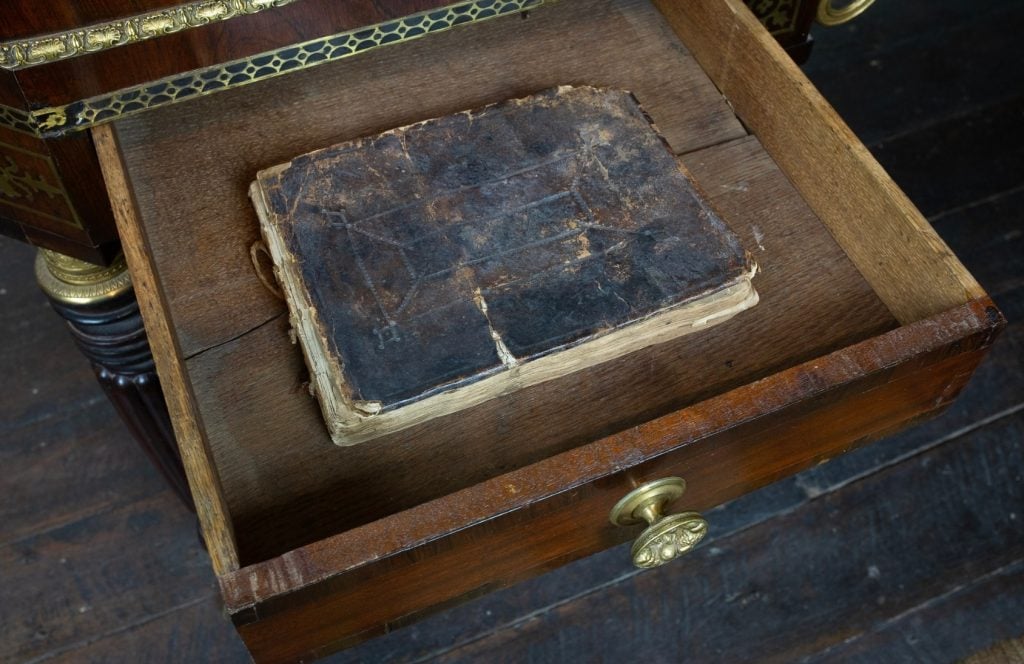
Piecing together the past, Shane has theorised that the Arthour–Wight manuscript may have been created in anticipation of celebrations for Helen’s wedding in 1734 and most conceivably reflects lessons undertaken by Margrat, taught by Scottish and foreign musicians associated with the Edinburgh Musical Society.
Written at a time when published music and public concerts were still a novelty in Scotland, the manuscript offers a rare link back to the evolution of music in the country. With only 27 significant pre-1750 violin manuscripts from Scotland known to exist in the world today, and few linked directly to female players, the book is also extraordinary for the intimate insight it offers into the musical practice of young women, a subject rarely recorded in the pages of history.
With thanks to the Copland Foundation, who funded conservation of the Arthour-Wight music manuscript.
Be immersed in the music
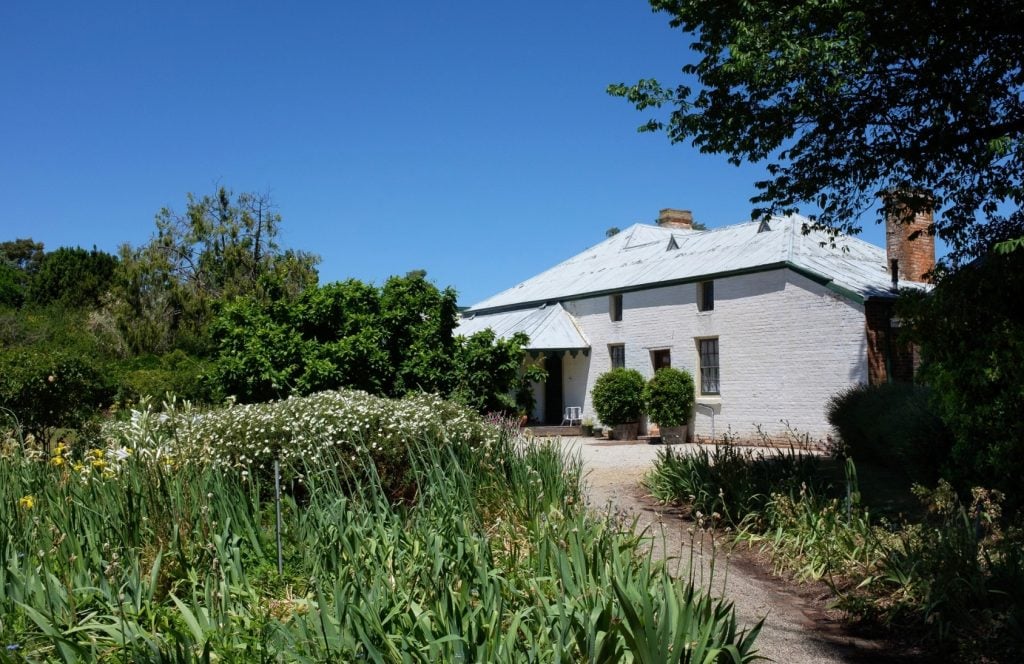
Inspired by the manuscript, Shane Lestideau has collaborated with the National Trust for an enchanting recital and presentation at Riversdale held on Saturday, 11 April 2026. Hear rare Scottish Baroque pieces played from the manuscript and be enthralled by the findings of Shane’s research into its origins.
Tickets include a recital, presentation, refreshments and access to explore Riversdale. Book your tickets now.
Can’t make the event? The rare 300-year-old practice book will be on display at Riversdale for the first time since undergoing recent conservation work, thanks to the Copland Foundation. Don’t miss your chance to see this fascinating historical object firsthand. Book your tickets.
 Facebook
 Linkedin
 Email
Email