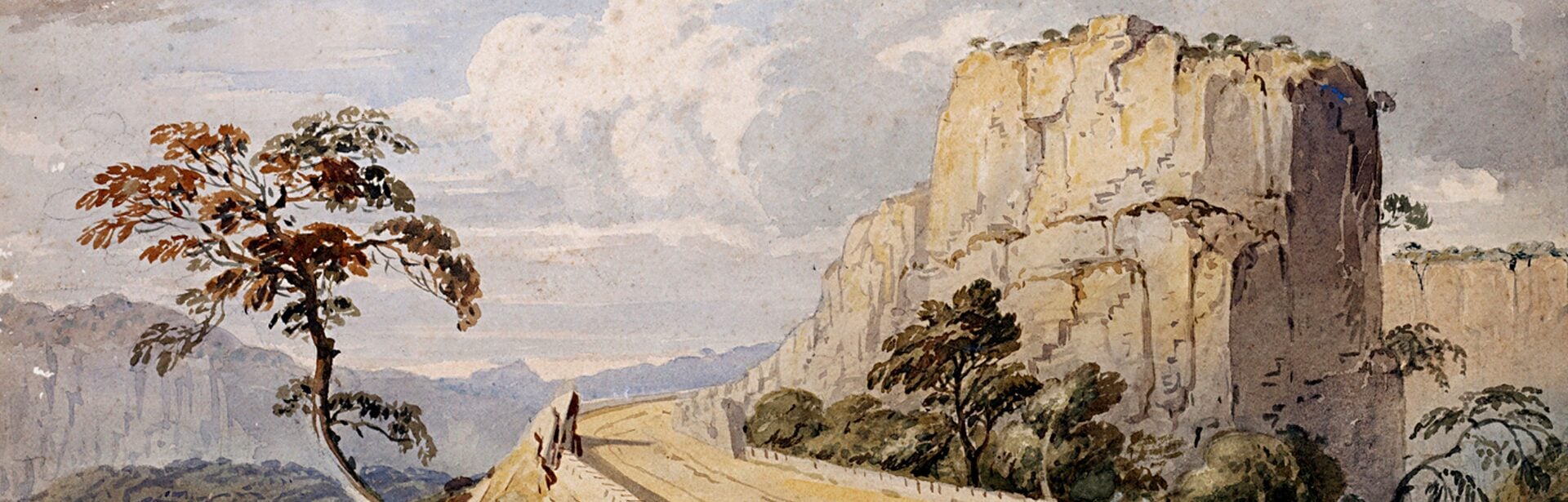
With the recent closure of Victoria Pass, we explore the history of this convict-built feat of engineering.
Victoria Pass, the historic convict-built section of the Great Western Highway across the Blue Mountains, is currently closed indefinitely due to structural issues. Urgent plans for repair are currently underway, with the viaduct expected to remain inaccessible for some months to come.
The Pass is an important link over the Great Dividing Range connecting Sydney to Lithgow, Bathurst and Western NSW. Victoria Pass is one of only two essential main roads directly across the Blue Mountains and into the Central West and has been an important part in the history of roads throughout our state for almost 200 years.
What is Victoria Pass?
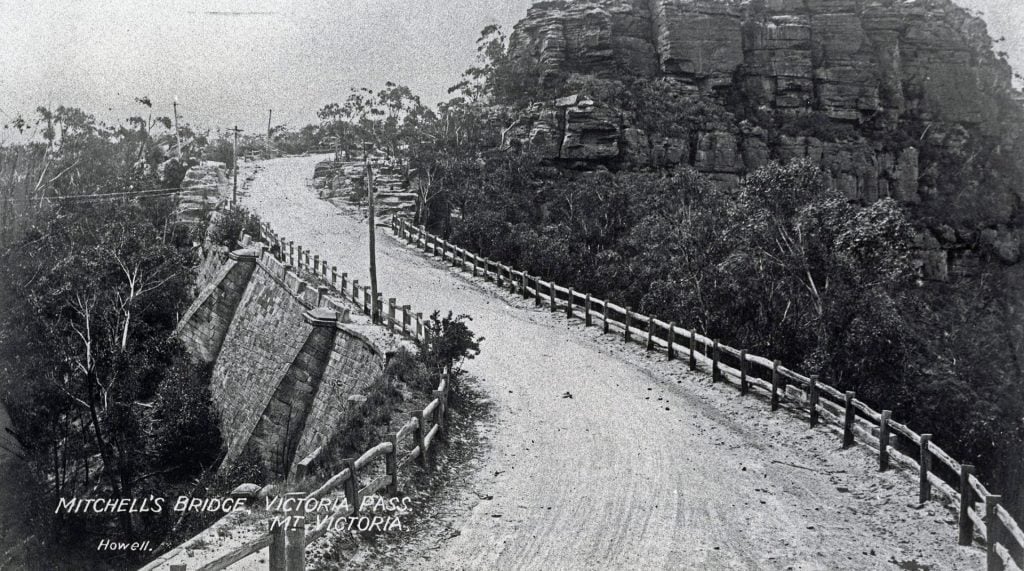
Victoria Pass is the stretch of the Great Western Highway as it begins its descent down the far western side of the mountains and into the Hartley Valley. This path weaves its way down through the steep ridgelines, and at its middle a causeway connects a narrow neck between two rocky outcrops.
The causeway, built from local sandstone, is reinforced by two heavy buttresses, filled with earth and rubble. It sits prominent and narrow, spanning this void at only two lanes wide. On either side is a sheer drop to the valley below.
The quality of the work is among the best of its period, comparable with the fine convict work on the Great North Road at Wisemans Ferry and Mount Simpson. The site retains evidence of its early origins, including some engravings on cuttings likely done by work gangs or travellers at the time of construction.
The origins of Victoria Pass
The Blue Mountains is within the Country of six Aboriginal Nations: the Gundungurra and Dharug as well as the Darkinjung, Dharawal, Wirajudiri and Wonnarua. The Blue Mountains, including the UNESCO World Heritage listed National Park, continues to be a significant place with deep connection to Country for Aboriginal People.
The first crossing of the Blue Mountains by Europeans was completed by Gregory Blaxland, William Wentworth and William Lawson in 1813. Their trek took around about three weeks and involved traversing the ridgelines and following Aboriginal pathways to find their way across the formerly impenetrable mountains.
The path was then surveyed and finalised by George William Evans who managed to cross the range completely to the other side. This mapping work was instrumental in allowing William Cox to oversee the creation of a road over the Blue Mountains and beyond. The completed track – just over 100 miles in length – was built between 18 July 1814 and 14 January 1815 using five freemen, 30 convict labourers and eight soldiers. Governor Macquarie surveyed the finished road in April 1815 by driving his carriage along it from Sydney to Bathurst. A bourgeoning Sydney was now connected to the west; however it was noted to be a difficult and tumultuously steep trek.
Construction of Victoria Pass
Over the next decade, a number of alternate routes would be created in attempts to ease the journey.
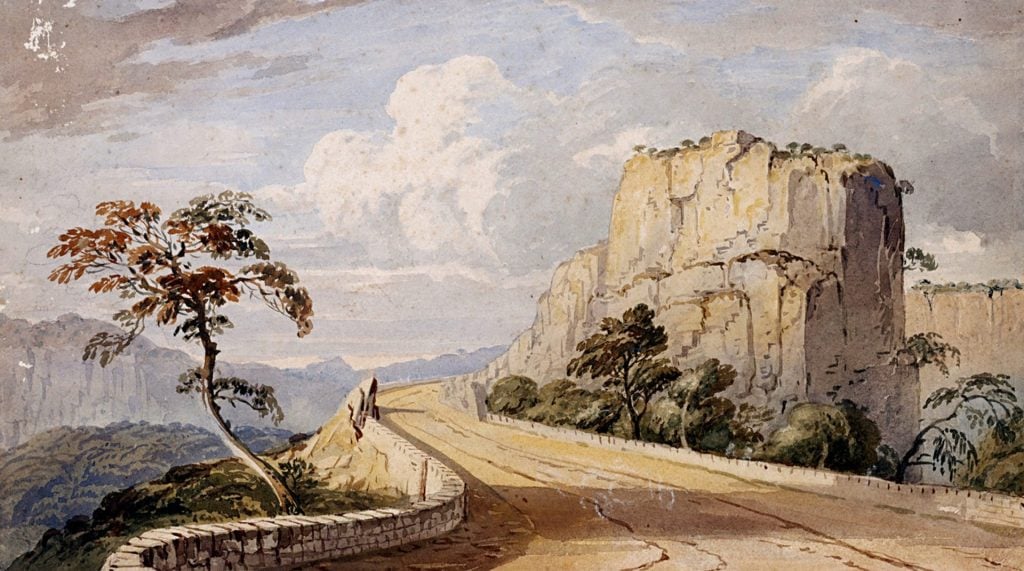
In the late 1820s, the Surveyor-General of NSW, Thomas Mitchell, worked on a number of improvements to the main roads out of Sydney. Amongst these was a focus on finding a better and more direct route down the mountains – identified in the opportunity to bridge the abyss along Mount Victoria, to become known as The Victoria Pass.
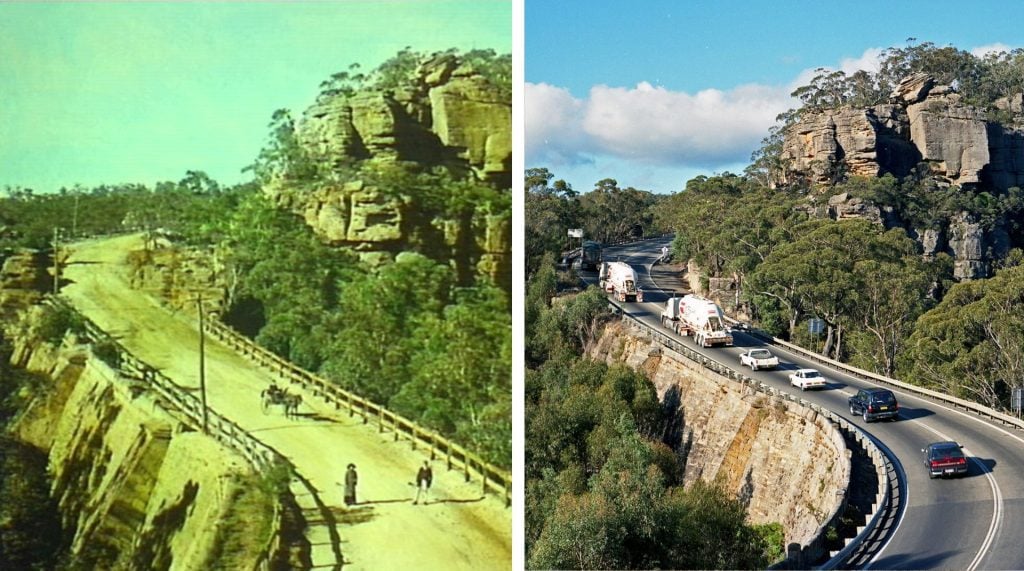
Construction began on the pass in 1830. A major engineering achievement completed with the assistance of convict labour, it was built using sandstone quarried on site.
The Victoria Pass was officially opened by Governor Bourke in 1832, however, convict workers continued on the site for a number of years afterwards to complete the final elements and undertake several repairs. For almost 200 years, it has remained the favoured road down the mountains.
The Pass is considered to be significant for its history in connecting the mountains to the west, and also for its role in Australian colonial and convict history. A rare and monumental feat of engineering for the time, the sandstone viaduct of Victoria Pass still allows a stunning view over a deep narrow span, with glimpses down the mountains on either side.
The Victoria Pass was listed on the National Trust Register in 1988 and just last year was recognised alongside the nearby Berghofers Pass on the State Heritage Register for NSW.
The future of Victoria Pass
The structure, now nearing its bicentenary, remains in very frequent use as the main route west from Sydney. It is estimated that over 10,000 vehicles pass through the slope each day. It is likely this combination of age and use which has led to structural inefficiencies in the causeway, as a pass originally built for 19th century wagons now handles much heavier freight.
The National Trust has contacted both Heritage NSW and the Department of Transport to ensure that necessary repairs will retain the significant fabric of the structure whilst making it safe and usable once again.
The Victoria Pass closure does not affect National Trust places located in the Blue Mountains. Everglades House & Gardens, Norman Lindsay Gallery and Woodford Academy are still open. We encourage you to visit and support these special places.
 Facebook
 Linkedin
 Email
Email