Vote for Victorian Tree of the Year 2026.

The Victorian Tree of the Year 2026 is here – and we need your help to choose the most magnificent significant tree in Victoria!

The Victorian Tree of the Year competition celebrates the significant trees of our state – the towering icons, quiet companions, and local legends that shape our landscapes and communities.

Whether it’s the tree you pass every day on your way to work, the one at the heart of your favourite park, or a majestic giant that’s been standing for centuries—this is your chance to shine a spotlight on a tree that matters.

We’re calling on tree enthusiasts, nature lovers, and anyone with a passion for our natural heritage to nominate their favourite significant tree for this year’s shortlist.

The Tree of the Year contest isn’t just about the oldest, the largest, or the most beautiful tree. Instead, it celebrates the vital role trees play in enriching our lives; supporting biodiversity and wildlife; cooling the places where we live and providing cleaner air; boosting mental health and wellbeing.  Our trees hold stories, memories, and deep cultural significance.
Call to action section

Vote for Victorian Tree of the Year

Voting is open until midnight, Thursday 22 October 2026.

Vote Now

2026 Tree of the Year Finalists

Related content section

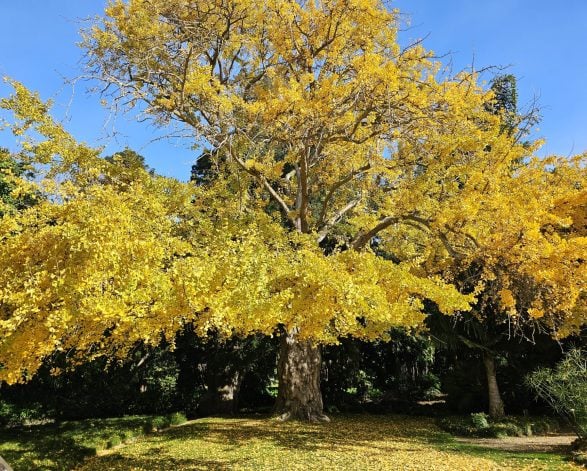
Ginkgo

Geelong

Ginkgo biloba

This female ginkgo tree started life as a seed planted in Geelong Botanic Garden in 1859. This example is the largest in Victoria, and may be the largest in cultivation in Australia.

Ginkgos, or Maidenhair trees, are a truly ancient tree: their leaves have been found in fossils throughout the world from the Middle Jurassic period (174 to 161 million years ago). Dinosaurs would have grazed on these trees along the edges of streams. However, their dominance waned, and for many centuries they were thought to be extinct in the wild.

The elegant fan-like foliage of this tree turns a golden colour in autumn, and this example also fruits. It’s delicate appearance and limited natural habitat are belied by the tree’s longevity, and amazing tenacity once established. At Hiroshima, Japan, six trees growing between 1-2 kilometres from the 1945 atom bomb explosion were among the few living organisms (hibakujumoku) in the area to survive the blast, and continue to thrive.

More

Myrtle Beech

Apollo Bay

Nothofagus cunninghamii

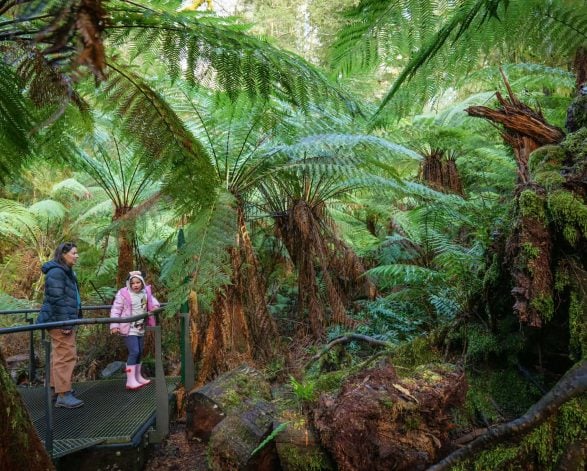
This is a particularly fine example of a native myrtle beech may be the result of two or three trees growing together, making it possible to wander through the complex living structure: a parallel to the web of life they support.

Myrtle beech have lived in Australia since the time of the Gondwanan supercontinent, but are now limited to areas of high rainfall in Victoria and Tasmania. Although they are a very long lived species (up to 500 years), they are highly susceptible to fire. Myrtle wilt has also become a serious problem for these ancient trees, often due to poor logging practices, leaving trees along roads, walking tracks, and logging areas more susceptible where they are more exposed to the elements.

Walking under the canopy of the myrtle beech, the sunlight filtered through it’s delicate small leaves, it is evident the range of life that they support: from birdlife in the treetop; to the lichens and other epiphytes growing on their branches; to the range of ferns underneath.

More

Flooded Gum

Carlton North

Eucalyptus grandis

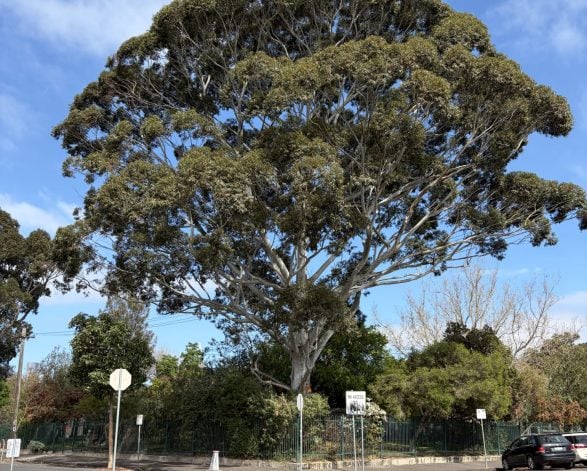
This tree is a beautiful aberration. Flooded gums naturally grow north of Newcastle, and are the dominant species in the rainforest edges around the Daintree, where rainfall is between 1000 and 3500mm per year. In their natural habitat, they grow straight and tall.

However, this eucalyptus, likely planted in the 1960s or 70s in Carlton North is a giant in the urban environment, and a landmark of pride for the local community.

It survives on much less water than it’s tropical cousins, and yet has developed an expansive and generous branching canopy that supports wildlife: cools and shades our urban environment: and provides terrific wellbeing benefits, especially for children at the adjacent early learning centre.

More

Californian Redwoods

Warburton

Sequoia semperverens

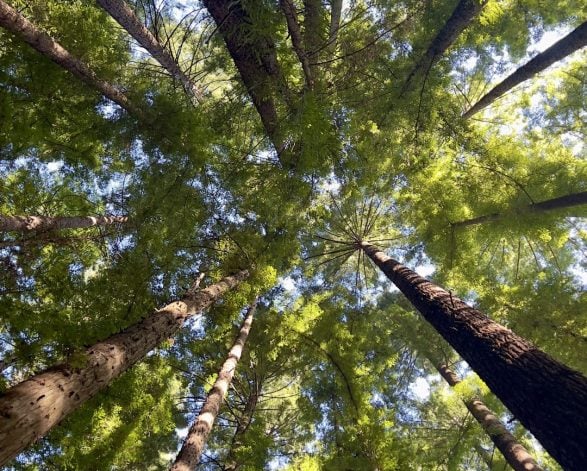
Although originally planted as a experimental plantation by the Melbourne Metropolitan Board of Works (MMBW) the redwood forest has come to mean much more to visitors.

Planted in the 1930s in straight rows to determine the ability of confers to clean drinking water in a landscape which had been extensively cleared, these relatively young trees now create a cathedral of trunks over a quiet carpet of leaves.

Californian Redwoods can live up to 2000 years, and reach heights more than double that of the existing plantings, and yet visiting this forest is an awe inspiring experience.

Many visitors come to feel that the atmosphere within the forest is quite magical, with the symmetry of planting being a particular highlight for photographers in all weathers.

More

Canary Island Pine

Ballarat Central

Pinus canariensis

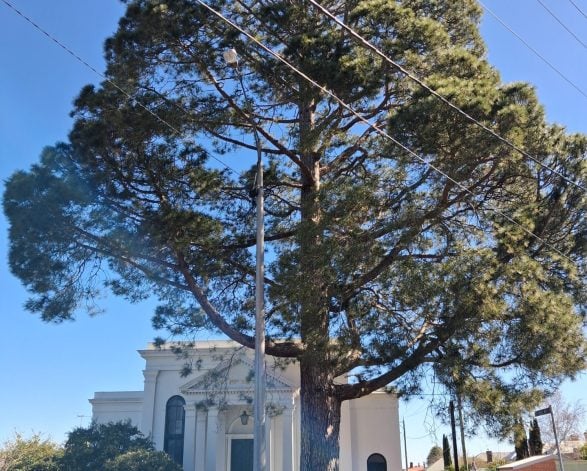
Planted by Jacob Bernstein (an active member of Ballarat’s Hebrew community) in 1867, this Canary Island Pine is a striking feature in the landscape of central Ballarat. Canary Island Pines are remarkable for their longevity and ability to survival climatic challenges: particularly relevant in our changing climate.

Fossils from Pinus canariensis have been uncovered from the late Miocene era, indicating that this species may be up to 11 million years old. While the trees cannot tolerate very cold temperatures, they survive a very wide range of rainfall, from as little as 200mm a year to several thousand. Canary Islands Pines are also the only conifer which is able to withstand bushfire, as it has epicormic shoots beneath the bark.

In their natural territory, these conifers make an important contribution to the water supply of the Canary Islands, as their needles trap moisture from sea fog and allow it to drip into the surrounding soil, replenishing fresh water aquifers.

More

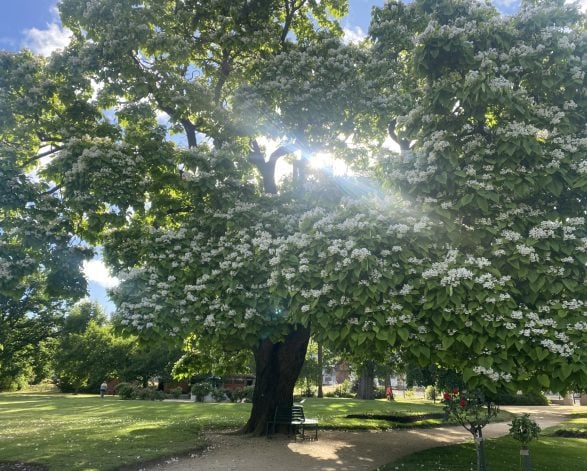
Indian Bean Tree

Castlemaine

Catalpa bignonioides

Native to central south eastern US, this Indian Bean Tree is the finest example of this species known in Victoria, and a lovely feature tree within the historic Castlemaine Botanical Gardens. The name Catalpa is derived from the Muscogee, the local native tribe, name for the plant, “kutuhipa” meaning winged head, likely relating to the form of the seeds.

Heralding each of the seasons, this tree is covered in large white flowers in spring, a full shady green canopy of large leaves in summer, and interesting long seed pods that often stay on the tree deep into the winter.

Fascinatingly, it is not only the flowers that have nectar, but also the leaves which secrete nectar especially either side of flowering time. The tree has been noted to produce additional nectar when being attacked by caterpillars, to attract ant bodyguards. It also appears to have a symbiotic relationship with Ceratomia caterpillars, which can tolerate the high levels of a particular chemical in the leaves which deters other herbivores from eating the large luscious leaves.

More

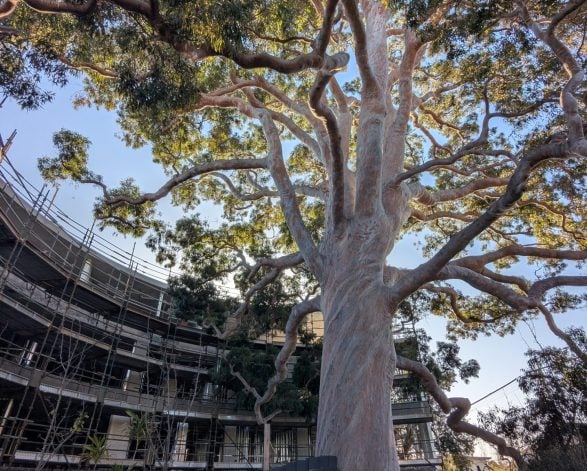
Smooth Barked Apple Myrtle

Prahran

Angphora costata

Of State level significance, this enormous angophora is the largest known specimen in cultivation. Located in a highly urban area that is being developed for higher density living, the architects and landscape architects immediately recognised that retaining the tree was essential to the character of this new housing.

While the site is still in construction, the tree appears to be healthy, and existing hard paving for carparking will be removed to form gardens and a permeable surface so that the tree will hopefully continue to grow for many years to come.

The tree supports not only human wellbeing, but a chorus of birds, and the flowers may also provide food for species such as flying foxes.

The design of the building aims to respect the tree, with every dwelling being embraced by its canopy – a wonderful example of retaining significant trees in urban development.

More

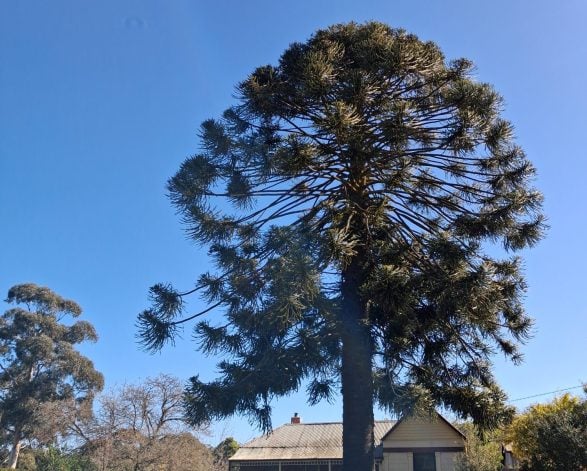
Bunya Pine

Maldon

Araucaria bidwilii

Widely planted in early Victorian gardens, this giant towers above it’s garden, creating a striking feature within the beautiful historic goldmining town of Maldon. Victorian gardeners likely appreciated the tree for it’s fascinating form and geometry, but there is another side to these native trees.

Originating from Queensland, they are of cultural and spiritual importance to First Nations peoples. They not only provide an important source of food: the seeds from the huge cones, but also new shoots can be consumed, and the bark used as kindling. Cones can weigh as much as 10kg. As the cones are very slow to develop and mature, it is understood that large community gatherings took place to coincide with harvest years, bringing people to celebrate these trees from great distances.

A standout in the landscape, Bunya Pines are hardy once established, and can live for up to 500 years.

More

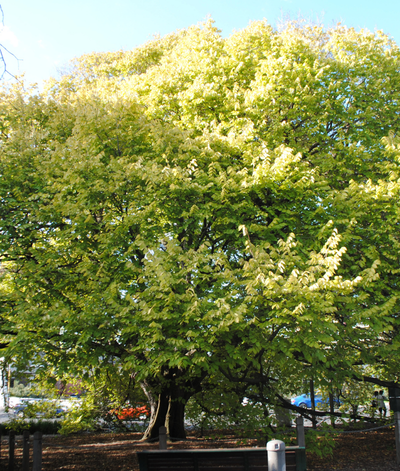
Golden Wych Elm

South Yarra

Ulmus glabra 'Lutescens'

Commonly known as the Golden Wych Elm, this tree is seen and appreciated by thousands of commuters every day.

Some of the best examples of these trees are found in Australia, having originated in the UK in the early 19th century.

A superb example of its species, and of a significant tree in the urban landscape. Planted in about 1938, it has been a symbol of the changing of the seasons in an urban environment for nearly 90 years.

It became Melbourne’s most emailed tree after the launch of the City of Melbourne’s Urban Forest Visual Website in 2013, which allowed people to address the cities trees as individuals, expressing their admiration, hopes and ideas.

More

About the Competition

The Victorian Tree of the Year shines a light on the importance of trees in our everyday lives. From improving air quality and supporting wildlife, to reducing stress, lowering urban heat, and offering moments of beauty—trees are vital to our wellbeing and the health of our communities.

Each of the trees is listed on the National Trust Significant Tree Register, which recognises thousands of important trees for their cultural, scientific, and historic value, and all stand as powerful reminders of the natural heritage we’re lucky to share.

The National Trust of Australia (Victoria) has been a proud advocate for tree protection for over 70 years. Since 1982, we’ve recorded more than 2,500 tree listings across Victoria—ensuring their stories are not forgotten, and their significance is formally recognised.

Key Dates

  • Nominations Open: National Tree Day, Sunday 26 July 2026 
  • Nominations Close: Sunday 30st August 2026 
  • Voting Opens: 9am Tuesday, 22 September 2026 
  • Voting Closes: Midnight, Thursday 22 October 2026 
  • The Victorian Tree of the Year winner will be announced: Tuesday 27 October 2026 

Shortlisting

The National Trust’s Significant Tree Expert Committee will consider nominations and create a shortlist of 9 trees which will then go to a public vote.  

If your favourite tree has missed out or isn’t yet included on the National Trust Register of Significant Trees, don’t worry – there’s always next year. 

Voting

The 2026 Shortlist and Voting for the Victorian Tree of the Year will be open at 9am on Tuesday 22 September to everyone through our website, and close at midnight on Thursday 22 October. 

The 2026 Victorian Tree of the Year winner, decided on by public vote, will be announced on Tuesday 28 October. 

Vote now

Question & Enquires

For competition enquiries email trusttrees@nattrust.com.au, for media enquiries email media@nattrust.com.au.

More Significant Trees

Search the Register

Search to find your favourite tree, or nominate a tree to the Register.

The National Trust of Australia (Victoria) is the state’s leading advocate for the protection of trees, celebrating the benefits they provide to our communities. Since 1982 the National Trust has classified over 20,000 trees in the National Trust Significant Tree Register.

Search

2025 Tree of the Year

Algerian Oak

Estimated to be over 130 years old, this remarkable tree stands 16 metres tall with a canopy spanning 31 metres, and now occupies the only piece of public land in Kingston.

More

Why Trees Matter

Celebrating Victoria's Living Heritage

Trees shape our landscapes, contribute to biodiversity and wellbeing, and tell stories of Victoria’s history and the enduring connections between people and place.

They are living heritage assets, deserving the same recognition and care we afford to historic buildings, landscapes and cultural places.

Learn More