With the summer ahead set to be particularly hot and dry, look to striking yet hardy native plants for your garden.
See what grows in your local area
Before you head to the nursery, stop and explore what grows naturally near your home first. Allana Sheard, the City and South Regional Manager with the National Trust’s Bushland Management Services, advises going for a local bushwalk. “See what’s working well and what’s in flower. Often I’ll visit bushland that is the same aspect as my garden, then I’ll try and mirror what’s working there.”
If particular native plants are growing well in nearby bushland, chances are it will do well in your garden. Take a photo, then look for the same plant when you visit the nursery.
Have a plan
“It’s best to plant six plants every square metre,” says Allana. “So before you go to the nursery, measure out your garden bed beforehand, and keep the six-plant rule of thumb in mind. Often people don’t put in enough plants.”
Aim to have a good spread of native plants in the same area so they can support each other and create a mini micro-climate. Also think about the structure of your garden – good groundcover, shrubs and canopy trees will all work together for a healthy garden. See our full list of plants to try below.
Not all Australian natives are native to your garden
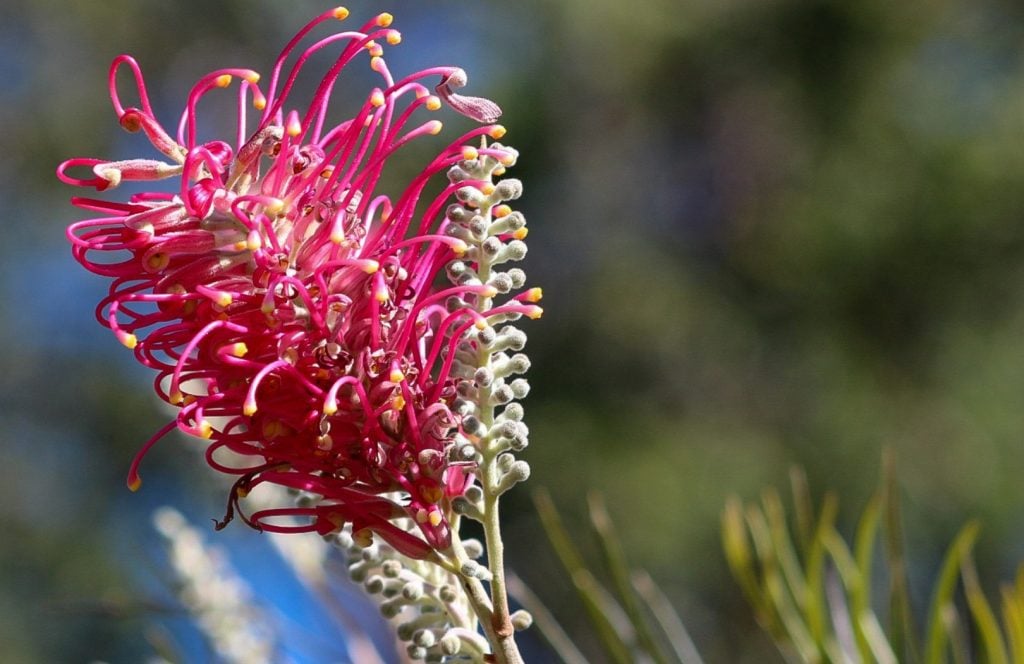
When we think showstopping native flowers, Grevilleas usually come to mind. But with over 300 species of Grevillea to choose from, Allana recommends doing some research and finding a species that’s endemic to your local area.
“Locally Indigenous plants have so many benefits. If you put in a Grevillea from another area, it looks lovely, but you might be attracting birds like Noisy Minors who will fight off native birds. Check with your nursery about which plants are native to your area – by putting in the right plants you’re helping the local fauna.”
Plant and water wisely
October and November are great times to plant Australian natives before the extreme heat sets in. Think small and buy seedlings rather than large established plants.
“We use seedlings for most of our plantings,” says Allana. “They’re more high maintenance at first, but the smaller roots allow them to establish quickly and in the end they’ll out-compete larger plants.”
Soil is also worth noting. Unlike cottage gardens that are rich in compost and manure, native garden beds prefer poorer, well-drained soil. You can mix some sand into normal soil, or apply fertilisers that are made especially for native plants.
Finally, keep the water strong and steady at first, then wind it back. “We water for eight weeks,” says Allana. “Water your seedlings three times a week for eight weeks, then gradually ease off to help your plants become self-sufficient. The beautiful thing about natives is that once established, you won’t need to do much at all.”
Ask your council for free plant giveaways
Some councils in NSW give away four free seedlings to local homeowners a few times a year. Allana recommends making the most of this service – not just for the free plants, but to also get tips from experts in your area.
“Free native plant giveaways are fantastic, and you can talk to the council staff and ask them which plant combinations work well. It’ll give you a really good idea of what you can plant in your area.” Check your local council website for details.
Try these plants
Ready to get started? Here are some native varieties to consider planting in your own garden:
SHRUBS
| Sydney Boronia (Boronia ledifolia) |
| Bossiaea (Bossiaea stephensoni) |
| Purple Burr-daisy (Calotis cuneifolia) |
| yellow burr-daisy (Calotis lappulacea) |
| Pink Matchheads (Comesperma ericinum) |
| White Correa (Correa alba) |
| Correa (Correa decumbens) |
| Crowea (Crowea saligna) |
| Eggs and Bacon (Dillwynia floribunda) |
| Grey Spider Flower (Grevillea buxifolia ) |
| Pink Spider Flower (Grevillea sericea) |
| Red Spider Flower (Grevillea speciosa) |
| White Everlasting Daisy (Helichrysum elatum) |
| Hovea (Hovea linearis) |
| Drumsticks (Isopogon anethifolius) |
| rice flower (Ozothamnus diosmifolius) |
GROUNDCOVERS AND GRASSES
Appleberry (Billardiera scandens)
Grass Daisy (Brachyscome graminea)
Cut-leaved daisy (Brachyscome multifida)
Common Everalsting (Chrysocephalum apiculatum)
Barb Wire Grass (Cymbopogon refractus)
Long Hair Plume Grass (Dichelachne crinita)
Saloop (Einadia hastata)
Hedgehog Grass (Echinopogon caespitosus)
Scrambling Lily (Geitonoplesium cymosum)
False Sarsaparilla (Hardenbergia violacea)
Snake vine (Hibbertia scandens)
Running Postman (Kennedia prostrata)
Lomandra multiflora (Lomandra multiflora)
Weeping Meadow Grass (Microlaena stipoides)
Basket grass (Oplismenus aemulus)
Poa (Poa affinis)
Chamomile Sunray (Rhodanthe anthemoides)
Wallaby Grasses (Rytidosperma caespitosum)
Fairy fanflower (Scaevola aemula)
Kangaroo Grass (Themeda australis)
Native violet (Viola hederacea)
 Facebook
 Linkedin
 Email
